How to Choose Linux Head Units for Stable In-Vehicle Integration




How to Choose Linux Head Units for Stable In-Vehicle Integration
Choosing the right linux head units is critical for stable in-vehicle integration, especially when technical evaluators must balance system compatibility, long-term reliability, and interface flexibility.
From smart cockpit applications to automotive-grade connectivity, the right selection affects development efficiency, upgrade potential, and overall vehicle performance.
This guide outlines the key factors to assess before making an informed decision.
In practice, linux head units are rarely judged by screen size alone.
The real question is whether the platform can stay stable across hardware changes, software updates, and vehicle-level integration demands.
That is where a structured selection process makes a clear difference.
Start with Vehicle Architecture, Not the Display
A common mistake is to shortlist linux head units by UI performance first.
That approach often creates trouble later, especially in mixed-domain vehicle electronics.
It is better to begin with the full in-vehicle architecture.
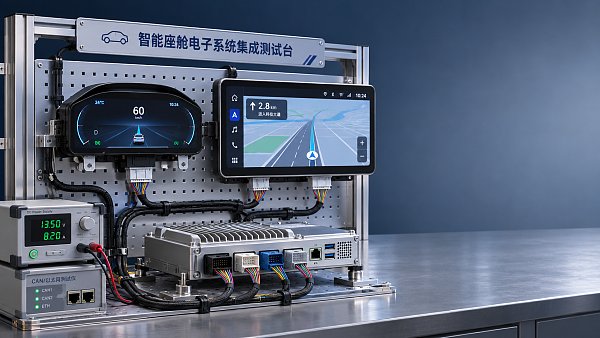
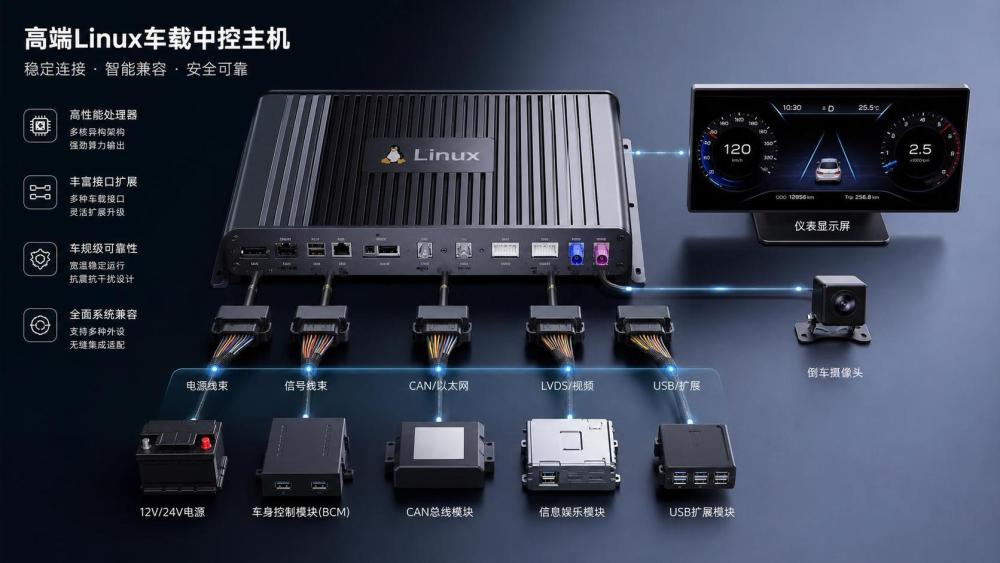
Check how the head unit will connect with instrument clusters, cockpit displays, cameras, amplifiers, telematics, HVAC controls, and steering wheel switches.
This also means mapping the communication paths early.
For many projects, the decision comes down to CAN, LIN, Ethernet, USB, Bluetooth, Wi-Fi, and LVDS support.
If linux head units cannot align with those interfaces cleanly, integration cost rises fast.
- List all required vehicle interfaces before reviewing suppliers.
- Confirm protocol stacks, gateway logic, and signal refresh needs.
- Check whether the unit supports future domain expansion.
This first step helps separate attractive demo units from integration-ready linux head units.
Evaluate Automotive-Grade Stability
Stable in-vehicle integration depends on more than operating system familiarity.
Linux head units must work under vibration, thermal cycling, voltage fluctuation, and long daily operating hours.
That is why hardware-grade validation matters as much as software features.
Look closely at processor selection, memory design, storage endurance, and power management behavior.
eMMC failure, unstable boot behavior, and poor thermal control remain common field risks.
More importantly, ask for proof rather than broad claims.
- Review temperature range and startup performance data.
- Check EMC, ESD, and power transient test records.
- Verify watchdog design and fail-safe reboot strategy.
- Ask how the unit handles brownout and sudden shutdown.
For decision-making, stable linux head units should show repeatable performance across validation batches, not just one polished sample.
Check Software Flexibility and Integration Depth
One reason linux head units remain attractive is software openness.
Even so, openness alone does not guarantee efficient integration.
The better question is how deeply the platform can be customized without destabilizing the vehicle program.
Pay attention to BSP maturity, middleware compatibility, driver completeness, and update strategy.
This becomes especially relevant when linux head units must support navigation, media, connectivity, voice interaction, camera display, and multi-screen coordination.
From recent market changes, faster iteration is now expected in cockpit electronics.
That means software maintenance capability should be part of supplier evaluation from day one.
- Confirm Linux kernel version and long-term support plan.
- Review SDK access, debugging tools, and API documentation.
- Assess OTA architecture and rollback protection.
- Check cybersecurity handling for external connectivity.
When linux head units fit the software roadmap well, later feature expansion becomes far easier and less risky.
Match Performance to Real Cockpit Workloads
Specification sheets can be misleading if they are read without workload context.
Linux head units that appear powerful on paper may still struggle in a full cockpit scenario.
This usually happens when graphics, media decoding, connectivity, and background services compete for the same resources.
A reliable evaluation should focus on actual usage combinations.
Test cold boot, resume speed, UI latency, voice wake-up response, Bluetooth pairing, navigation rendering, and reverse camera switching.
If the project targets smart cockpit electronics, also test multi-display synchronization and audio path stability.
This kind of testing gives a more realistic picture of which linux head units can handle production workloads.
Review Supply Chain Readiness and Lifecycle Support
Technical fit is only part of the decision.
Linux head units also need supply chain stability, especially for programs with multi-year production cycles.
A strong platform can still become a weak choice if core chips face allocation risk or short product lifecycles.
This is even more important in global automotive sourcing, where regional compliance and export continuity matter.
Ask suppliers how they manage component replacement, PCN response, and second-source planning.
Also check whether they support localized engineering and issue resolution.
- Confirm lifecycle commitment for SoC, memory, and display parts.
- Review change notification and revision control processes.
- Check PPAP-related readiness if required by the program.
- Assess after-sales debugging support and field analysis speed.
In real sourcing decisions, dependable lifecycle support often outweighs a small upfront cost advantage.
Use a Practical Shortlisting Framework
A practical framework helps compare linux head units without getting lost in supplier presentations.
The goal is not to create a perfect scorecard.
The goal is to identify the options with the lowest integration risk and the best long-term fit.
A simple weighted model usually works well.
- Define must-have interface and performance requirements.
- Remove linux head units that fail baseline compliance.
- Score remaining options on stability, software support, and lifecycle risk.
- Run one consistent vehicle-level validation scenario for all finalists.
- Compare not only price, but total integration effort.
This approach keeps discussions focused on measurable outcomes.
It also helps internal teams align faster across engineering, procurement, and product planning.
Final Decision: Choose for Integration Confidence
The best linux head units are not simply the ones with the newest chip or the most polished demo.
They are the ones that fit the vehicle architecture, stay stable under automotive conditions, and remain maintainable through the product lifecycle.
That is the stronger signal for stable in-vehicle integration.
For teams following cockpit electronics, infotainment, wiring architecture, and broader automotive component trends, a structured evaluation creates better decisions with fewer late-stage surprises.
If the next step is supplier comparison, start with interface mapping, validation evidence, software support depth, and lifecycle commitment.
That process will make linux head units easier to compare, easier to integrate, and far safer to scale into production.
Have questions about this sector analysis, or seeking best practices specific to your niche? Drop us a line below and let the senior consultants at GAC assist you.
“We respect your privacy. Your information is strictly confidential.”
Related News
- 00
0000-00
How to assess a smart cockpit electronics manufacturer's integration capability - 00
0000-00
How does a shielded HSD cable reduce interference in vehicles? - 00
0000-00
What drives demand for scroll compressors in the automotive market? - 00
0000-00
Does AEC-Q200 apply to flexible printed circuits? - 00
0000-00
How does production volume affect automotive flexible electronics costs?
Weekly Insights
Stay ahead with our curated technology reports delivered every Monday.
Recommended News
 How to assess a smart cockpit electronics manufacturer's integration capabilityAssess a smart cockpit electronics manufacturer's integration capability with practical checks for interfaces, testing, safety, cybersecurity and supplier support.Author:Time:Nov 18, 2026
 How does a shielded HSD cable reduce interference in vehicles?Discover how a shielded HSD cable reduces vehicle interference, and learn why connector design, routing, and testing matter for reliable high-speed data links.Author:Time:Nov 17, 2026
 What drives demand for scroll compressors in the automotive market?Explore the scroll compressor for automobile market and discover how EV adoption, heat pumps, efficiency, and supplier capabilities shape demand.Author:Time:Nov 16, 2026
 Does AEC-Q200 apply to flexible printed circuits?Flexible Printed Circuit AEC-Q200 requirements explained: discover which components qualify and how to assess automotive FPC reliability.Author:Time:Nov 15, 2026
 How does production volume affect automotive flexible electronics costs?Explore how production volume affects automotive flexible electronics cost, from tooling and yield to testing. Compare quotes and negotiate smarter.Author:Time:Nov 14, 2026
 How much does an in-vehicle infotainment system cost to replace?Explore in-vehicle infotainment cost, from affordable repairs to factory replacements. Compare options, installation fees, and compatibility before you buy.Author:Time:Nov 13, 2026
 How does condenser efficiency affect heat pump performance?Discover how condenser high efficiency can improve heat pump performance, reduce compressor power, and boost heating COP—plus the trade-offs to watch.Author:Time:Nov 12, 2026
 What does each FAKRA cable color code mean?FAKRA cable color code explained: Explore common connector colors, typical uses and key compatibility checks before choosing a replacement.Author:Time:Nov 11, 2026
 How to compare noise ratings for battery coolant pumpsCompare coolant pump low noise ratings with confidence. Learn how test conditions, hydraulic duty, tonal noise and installation affect your choice.Author:Time:Nov 10, 2026
 How bright should automotive display systems be in sunlight?Automotive Display Systems need more than brightness to stay readable in sunlight. Discover why 1,000 nits is a starting point and how to evaluate glare and heat.Author:Time:Nov 09, 2026
 How heat pumps improve the efficiency of EV thermal systemsEV Thermal Systems use heat pumps to reduce heating energy demand. Explore how they work, where they excel, and what limits efficiency in cold weather.Author:Time:Nov 08, 2026
 Can a smart cockpit platform support multiple displays?Can a smart cockpit platform support multiple displays? Explore key requirements for performance, safety, connectivity, and supplier evaluation.Author:Time:Nov 07, 2026
 How is automotive connector vibration resistance tested?Automotive connector vibration resistance testing reveals hidden contact failures. Explore test profiles, continuity monitoring and pass criteria.Author:Time:Nov 06, 2026
 How heat pumps save energy in automotive cabin climate systemsAutomotive Cabin Climate Systems energy saving starts with smarter heat pump design. Explore real-world efficiency, cold-weather trade-offs, and testing tips.Author:Time:Nov 05, 2026
 Is an EV heat pump worth it for winter driving range?Is a heat pump worth using in a cold-climate EV? Discover how it affects winter range, when it pays off, and what to check before buying.Author:Time:Nov 04, 2026
 When should you use 50-ohm coaxial cable instead of 75-ohm?Coaxial cable 50 ohm or 75 ohm? Learn when to use each, avoid impedance mismatches, and choose the right cable for reliable RF and video performance.Author:Time:Nov 03, 2026
 How to select a high temperature motor harness for an EVChoose the right high temperature motor harness for your EV. Compare thermal limits, current capacity, shielding, routing, and validation evidence.Author:Time:Nov 02, 2026
 How much does electric power steering replacement cost?Electric power steering price typically ranges from $1,000 to $3,000 for major replacements. Discover cost factors, repair options, and tips for comparing quotes.Author:Time:Nov 01, 2026
 How to size an EV A/C compressor for the required cooling capacitySize an EV A/C Compressor with confidence. Explore cooling loads, performance maps and power limits to select the right compressor for your vehicle.Author:Time:Oct 31, 2026
 How to choose the right pitch for an FPC board connectorFPC board connector pitch affects space, assembly and reliability. Learn how to compare options and select the best fit for your design.Author:Time:Oct 30, 2026
 How zonal design affects harness routing in high-voltage EV architecturesExplore high-voltage electrical architecture zonal design and its impact on EV harness routing. Discover key trade-offs in cable length, safety, thermal performance, and service access.Author:Time:Oct 29, 2026
 How tariffs affect costs in global automotive parts supply chainsNavigate tariffs in the global automotive parts trade supply chain. Learn to compare landed costs, manage duty exposure, and uncover smarter sourcing strategies to protect your margins.Author:Time:Oct 28, 2026
 How to assess vendor lock-in in a software-defined vehicle platformAssess Software-Defined Vehicle platform lock-in with practical tests for API portability, data access, update control, and exit costs. Learn how to choose a platform with a proven exit path.Author:Time:Oct 27, 2026
 How ISO 26262 guides functional safety in steer-by-wire systemsExplore steering systems functional safety through ISO 26262. Learn how hazard analysis, fault-tolerant design, and validation build a stronger steer-by-wire safety case.Author:Time:Oct 26, 2026
 How to evaluate a steering angle sensor manufacturer's accuracy claimsEvaluate steering angle sensor manufacturer accuracy claims with practical checks on calibration, latency, and test evidence. Compare suppliers confidently and avoid costly selection mistakes.Author:Time:Oct 25, 2026
 How to diagnose CAN bus faults in a hybrid vehicle control unitDiagnose Hybrid Vehicle Systems control unit CAN bus faults with step-by-step power, wiring, and waveform checks. Find the root cause and avoid unnecessary replacement.Author:Time:Oct 24, 2026
 How does battery cooling pipe diameter affect coolant pressure drop?Battery Cooling Pipe diameter affects coolant pressure drop and pump power. Explore sizing calculations and practical tips to optimize EV battery cooling and compare options with confidence.Author:Time:Oct 23, 2026
 How to assess PPAP readiness of automotive sensor system manufacturersAssess Automotive Sensor Systems manufacturers for PPAP readiness. Learn to verify production evidence, measurement capability, validation, and traceability to reduce sourcing risks.Author:Time:Oct 22, 2026
 What to ask an FPC connector manufacturer about reliability testingChoosing an FPC Connector manufacturer? Learn what to ask about reliability testing, failure limits, and traceable results to reduce design risks and select with confidence.Author:Time:Oct 21, 2026
 How to verify vehicle fitment for an aftermarket AC evaporatorNavigating the evaporator aftermarket? Verify vehicle fitment with VIN data, OE numbers, and physical interface checks. Use this guide to avoid costly mismatches and order confidently.Author:Time:Oct 20, 2026