
Digital Media Head Unit Selection: Screen, OS, and Connectivity Checklist




Selecting a digital media head unit is no longer a matter of screen size alone. In current vehicle programs, the head unit sits at the center of infotainment, cockpit interaction, connectivity, and software integration.
That makes early evaluation more demanding. Display clarity, operating system behavior, interface compatibility, and update readiness all shape user experience, electrical architecture fit, and lifecycle cost.
This matters even more as smart cockpit electronics evolve alongside NEV thermal systems, wiring architectures, HUD platforms, and connected vehicle functions. For platforms tracked across GACT, the digital media head unit is part of a wider component strategy, not an isolated device.
Why the head unit now carries more weight
A digital media head unit used to be judged mainly on audio, radio, and navigation support. Today it often coordinates media, phone mirroring, cameras, vehicle settings, cloud services, and cross-screen interaction.
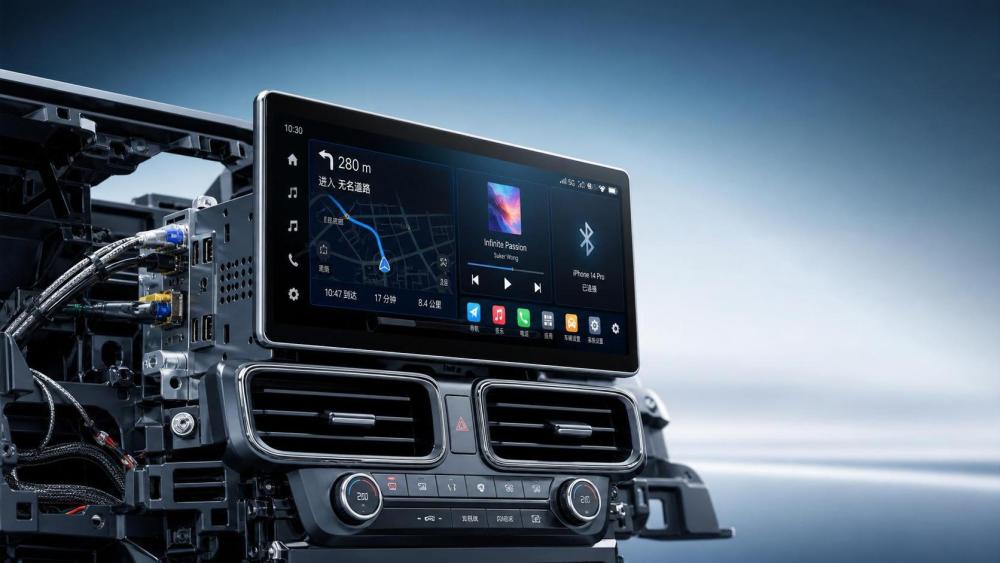
Its role expands further in electric and connected vehicles. As cockpit displays become larger and more integrated, response speed, boot time, thermal tolerance, and communication stability become practical selection issues.
There is also a supply chain angle. Regional market preferences differ on display size, smartphone ecosystem support, voice functions, certification, and data connectivity, so specification choices affect export and localization plans.
Start with the screen, but do not stop there
The screen is the most visible part of a digital media head unit, but visual appeal alone is a weak filter. What matters is how display performance fits the vehicle cabin, software layout, and expected usage conditions.
Resolution and viewing quality
Resolution should match interface density. A larger panel with low effective sharpness can make icons and split-screen layouts look coarse, especially when paired with camera feeds or map layers.
Brightness and contrast are just as important. In practical cockpit conditions, sunlight readability and low-light comfort often matter more than brochure-level pixel counts.
Touch structure and durability
Capacitive touch is common, but response consistency under gloves, humidity changes, and repeated use should still be checked. Surface treatment, fingerprint resistance, and scratch behavior also affect long-term quality perception.
Mechanical fit in the cockpit
Screen size changes housing depth, heat dissipation needs, bezel design, and dashboard integration. A digital media head unit that looks competitive on paper may create packaging pressure once vents, harness routing, and structural supports are considered.
Operating system choices shape long-term stability
For many programs, the operating system decision has more consequences than the display specification. It affects application ecosystem flexibility, cybersecurity workload, update strategy, and integration with other cockpit domains.
Platform architecture and middleware
Android-based systems offer familiarity and broad app support, but they require careful control over customization, permission management, and version maintenance. Linux-based systems can provide tighter control and lighter resource use.
The right answer depends on project goals. If the digital media head unit must support branded interfaces, connected services, and rapid feature growth, software stack governance becomes a critical screening item.
Boot time and runtime behavior
Fast cold boot and reliable wake-up performance matter in daily use. Lag during source switching, map loading, Bluetooth pairing, or reverse camera activation can quickly turn an acceptable design into a rejected one.
Update path and lifecycle support
A digital media head unit should be judged on update feasibility, not just launch features. OTA capability, rollback logic, patch frequency, and regional software maintenance plans all influence total program risk.
Connectivity is where many selection risks appear
Connectivity looks straightforward until real integration starts. The digital media head unit may need to bridge consumer devices, vehicle buses, telematics modules, amplifiers, cameras, microphones, and external displays.
Because of that, interface coverage should be reviewed as a system-level checklist rather than a feature list.
In practice, connectivity quality is often influenced by neighboring components. Wiring harness design, FPC routing, data cable shielding, and power stability can all change the behavior of the same digital media head unit.
Evaluation should reflect actual vehicle scenarios
Bench validation is useful, but it does not replace in-vehicle assessment. The digital media head unit needs to be checked in the context where heat load, vibration, speaker tuning, camera latency, and network traffic are all real.
Typical use cases worth simulating
- Frequent short-trip starts with repeated sleep and wake cycles
- Navigation, music streaming, and voice assistant running together
- Reverse camera activation during phone mirroring sessions
- High cabin temperature after solar soak
- Weak network conditions during cloud service access or OTA download
These scenarios reveal whether a digital media head unit is only feature-rich, or genuinely robust enough for production use.
How industry trends are changing the checklist
Smart cockpit development is pushing head units toward deeper coordination with cluster displays, HUD systems, voice domains, and cloud services. That changes the definition of a competitive digital media head unit.
The shift to zonal and high-speed electrical architectures also matters. Ethernet readiness, software modularity, and domain integration are becoming stronger differentiators than standalone entertainment features.
Regional compliance and cybersecurity pressure are also rising. Programs targeting China, Europe, the United States, Japan, India, or Southeast Asia may face different expectations for data handling, connected content, and interface compatibility.
That is why market intelligence sources such as GACT are useful in parallel with technical testing. Product evaluation increasingly depends on both engineering fit and supply chain visibility.
A practical selection framework
A workable review process usually combines hardware checks, software validation, and application scenario matching. The goal is to screen out hidden constraints before design freeze.
Key filters to apply early
- Confirm target display size, brightness, and touch behavior against cabin design
- Review OS roadmap, middleware support, and OTA maintenance responsibility
- Map required interfaces to vehicle network, harness, and peripheral architecture
- Test boot speed, pairing stability, camera switching, and multi-tasking behavior
- Check regional compliance, smartphone ecosystem fit, and export adaptability
- Assess thermal performance under realistic dashboard and ambient conditions
A digital media head unit that passes these checks is more likely to support platform consistency across variants, reduce rework, and remain compatible with later cockpit upgrades.
What to examine next
The next step is to turn general interest into a narrower evaluation matrix. That usually means ranking features by vehicle segment, software strategy, electrical architecture, and destination market.
It also helps to compare the digital media head unit against adjacent systems such as cockpit displays, HUD integration, data cables, and high-voltage or low-voltage architecture constraints. Those links often explain whether a promising unit will scale cleanly.
A clear checklist built around screen performance, OS stability, and connectivity readiness gives the selection process more discipline. It also creates a stronger basis for supplier comparison, validation planning, and future smart cockpit decisions.
Have questions about this sector analysis, or seeking best practices specific to your niche? Drop us a line below and let the senior consultants at GAC assist you.
“We respect your privacy. Your information is strictly confidential.”
Related News
- 00
0000-00
What does each FAKRA cable color code mean? - 00
0000-00
How to compare noise ratings for battery coolant pumps - 00
0000-00
How bright should automotive display systems be in sunlight? - 00
0000-00
How heat pumps improve the efficiency of EV thermal systems - 00
0000-00
Can a smart cockpit platform support multiple displays?
Weekly Insights
Stay ahead with our curated technology reports delivered every Monday.
Recommended News
 What does each FAKRA cable color code mean?FAKRA cable color code explained: Explore common connector colors, typical uses and key compatibility checks before choosing a replacement.Author:Time:Nov 11, 2026
 How to compare noise ratings for battery coolant pumpsCompare coolant pump low noise ratings with confidence. Learn how test conditions, hydraulic duty, tonal noise and installation affect your choice.Author:Time:Nov 10, 2026
 How bright should automotive display systems be in sunlight?Automotive Display Systems need more than brightness to stay readable in sunlight. Discover why 1,000 nits is a starting point and how to evaluate glare and heat.Author:Time:Nov 09, 2026
 How heat pumps improve the efficiency of EV thermal systemsEV Thermal Systems use heat pumps to reduce heating energy demand. Explore how they work, where they excel, and what limits efficiency in cold weather.Author:Time:Nov 08, 2026
 Can a smart cockpit platform support multiple displays?Can a smart cockpit platform support multiple displays? Explore key requirements for performance, safety, connectivity, and supplier evaluation.Author:Time:Nov 07, 2026
 How is automotive connector vibration resistance tested?Automotive connector vibration resistance testing reveals hidden contact failures. Explore test profiles, continuity monitoring and pass criteria.Author:Time:Nov 06, 2026
 How heat pumps save energy in automotive cabin climate systemsAutomotive Cabin Climate Systems energy saving starts with smarter heat pump design. Explore real-world efficiency, cold-weather trade-offs, and testing tips.Author:Time:Nov 05, 2026
 Is an EV heat pump worth it for winter driving range?Is a heat pump worth using in a cold-climate EV? Discover how it affects winter range, when it pays off, and what to check before buying.Author:Time:Nov 04, 2026
 When should you use 50-ohm coaxial cable instead of 75-ohm?Coaxial cable 50 ohm or 75 ohm? Learn when to use each, avoid impedance mismatches, and choose the right cable for reliable RF and video performance.Author:Time:Nov 03, 2026
 How to select a high temperature motor harness for an EVChoose the right high temperature motor harness for your EV. Compare thermal limits, current capacity, shielding, routing, and validation evidence.Author:Time:Nov 02, 2026
 How much does electric power steering replacement cost?Electric power steering price typically ranges from $1,000 to $3,000 for major replacements. Discover cost factors, repair options, and tips for comparing quotes.Author:Time:Nov 01, 2026
 How to size an EV A/C compressor for the required cooling capacitySize an EV A/C Compressor with confidence. Explore cooling loads, performance maps and power limits to select the right compressor for your vehicle.Author:Time:Oct 31, 2026
 How to choose the right pitch for an FPC board connectorFPC board connector pitch affects space, assembly and reliability. Learn how to compare options and select the best fit for your design.Author:Time:Oct 30, 2026
 How zonal design affects harness routing in high-voltage EV architecturesExplore high-voltage electrical architecture zonal design and its impact on EV harness routing. Discover key trade-offs in cable length, safety, thermal performance, and service access.Author:Time:Oct 29, 2026
 How tariffs affect costs in global automotive parts supply chainsNavigate tariffs in the global automotive parts trade supply chain. Learn to compare landed costs, manage duty exposure, and uncover smarter sourcing strategies to protect your margins.Author:Time:Oct 28, 2026
 How to assess vendor lock-in in a software-defined vehicle platformAssess Software-Defined Vehicle platform lock-in with practical tests for API portability, data access, update control, and exit costs. Learn how to choose a platform with a proven exit path.Author:Time:Oct 27, 2026
 How ISO 26262 guides functional safety in steer-by-wire systemsExplore steering systems functional safety through ISO 26262. Learn how hazard analysis, fault-tolerant design, and validation build a stronger steer-by-wire safety case.Author:Time:Oct 26, 2026
 How to evaluate a steering angle sensor manufacturer's accuracy claimsEvaluate steering angle sensor manufacturer accuracy claims with practical checks on calibration, latency, and test evidence. Compare suppliers confidently and avoid costly selection mistakes.Author:Time:Oct 25, 2026
 How to diagnose CAN bus faults in a hybrid vehicle control unitDiagnose Hybrid Vehicle Systems control unit CAN bus faults with step-by-step power, wiring, and waveform checks. Find the root cause and avoid unnecessary replacement.Author:Time:Oct 24, 2026
 How does battery cooling pipe diameter affect coolant pressure drop?Battery Cooling Pipe diameter affects coolant pressure drop and pump power. Explore sizing calculations and practical tips to optimize EV battery cooling and compare options with confidence.Author:Time:Oct 23, 2026
 How to assess PPAP readiness of automotive sensor system manufacturersAssess Automotive Sensor Systems manufacturers for PPAP readiness. Learn to verify production evidence, measurement capability, validation, and traceability to reduce sourcing risks.Author:Time:Oct 22, 2026
 What to ask an FPC connector manufacturer about reliability testingChoosing an FPC Connector manufacturer? Learn what to ask about reliability testing, failure limits, and traceable results to reduce design risks and select with confidence.Author:Time:Oct 21, 2026
 How to verify vehicle fitment for an aftermarket AC evaporatorNavigating the evaporator aftermarket? Verify vehicle fitment with VIN data, OE numbers, and physical interface checks. Use this guide to avoid costly mismatches and order confidently.Author:Time:Oct 20, 2026
 How electric compressor speed affects EV battery cooling capacityElectric compressor technology: battery cooling depends on more than RPM. Discover how speed, refrigerant flow, and system limits affect EV cooling capacity and energy efficiency.Author:Time:Oct 19, 2026
 How to verify a variable frequency compressor supplier’s efficiency claimsVerify a variable frequency compressor supplier’s efficiency claims using COP boundaries, matched test conditions, and duty-cycle data. Learn how to choose with confidence.Author:Time:Oct 18, 2026
 How bend radius affects FPC reliability in automotive camera modulesAutomotive FPC applications: camera module reliability starts with bend radius. Learn how stack-up, strain, and validation guide robust designs and help prevent costly failures.Author:Time:Oct 17, 2026
 How to diagnose intermittent loss of electric power steering assistMaster power steering system diagnostics to trace intermittent EPS assist loss. Learn proven checks for voltage, wiring, and fault codes to avoid costly guesswork.Author:Time:Oct 16, 2026
 How to size automotive power modules for electric compressorsSize automotive power modules for electric compressors with confidence. Learn how voltage, phase current, losses, and cooling shape reliable selection—and avoid costly oversizing.Author:Time:Oct 15, 2026
 Why automotive power electronics are shifting to silicon carbideAutomotive Power Electronics are shifting to silicon carbide. Discover how SiC can cut losses, boost EV power density, and reshape cooling, reliability, and system costs.Author:Time:Oct 14, 2026
 How EV adoption shapes the electrically driven compressor marketExplore how EV adoption shapes the electrically driven compressor market, from battery cooling and heat pumps to supplier margins. Discover the drivers of profitable growth.Author:Time:Oct 13, 2026





























