
High-voltage flat-wire motors: efficiency vs integration cost




As EV architectures move toward higher power density and tighter packaging, high-voltage flat-wire motors are gaining attention for their efficiency gains and thermal advantages. For procurement teams, however, the real question is whether better performance justifies higher integration cost across materials, manufacturing, and system matching. This article examines that trade-off to support smarter sourcing and long-term supply chain decisions.
For buyers in the automotive supply chain, this is not only a motor question. It is a platform decision affecting inverter matching, cooling layout, harness routing, NVH targets, yield management, and lifecycle cost over 5 to 8 years.
Within the GACT focus areas of e-drive controls, smart integration, and thermal systems, high-voltage flat-wire motors sit at the intersection of copper utilization, heat dissipation, and compact packaging. That makes them strategically relevant for OEM sourcing teams and Tier 1 procurement leaders.
Why high-voltage flat-wire motors are gaining share in next-generation EV platforms
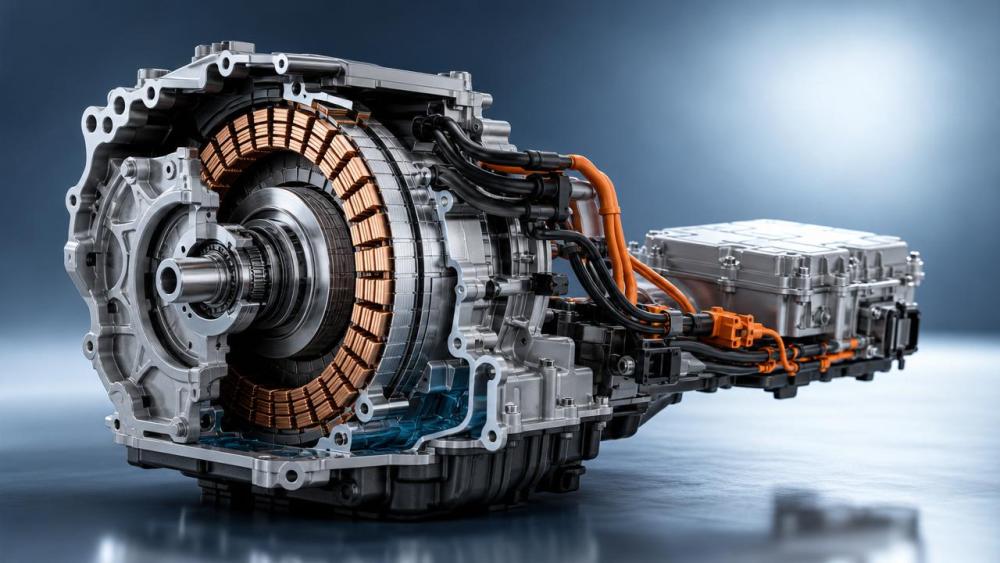
High-voltage flat-wire motors use rectangular conductors rather than conventional round wire in the stator winding. In many EV programs, the appeal comes from 3 practical gains: higher slot fill factor, stronger thermal conduction paths, and better use of limited e-axle space.
In typical automotive designs, slot fill can improve by roughly 10% to 20% compared with comparable round-wire layouts, depending on winding method and insulation allowance. Better copper packing can raise torque density and reduce resistive loss under medium-to-high load conditions.
For thermal engineers, the benefit is equally important. More uniform conductor arrangement can support better heat transfer from the winding to the stator core and cooling jacket. In an 800 V architecture, even a 1% to 2% efficiency gain can influence cruising range, peak repeatability, and cooling system sizing.
Performance value beyond headline efficiency
Procurement teams should look beyond the marketing claim of “higher efficiency.” The value case often comes from system-level impact: smaller current for the same power, reduced copper loss at high speed, and more stable temperature rise during repeated acceleration events.
This matters most in vehicles with output bands above 120 kW, continuous high-speed operation, or strict package envelopes. In compact urban EVs below 80 kW, the payback may be less obvious unless the OEM also targets aggressive lightweighting or a shared 400 V/800 V motor family.
Where buyers typically see the strongest fit
- Mid-to-high power passenger EVs in the 120 kW to 250 kW range
- Integrated e-axles with limited radial space and demanding thermal control
- 800 V platforms seeking lower current and faster charging alignment
- Programs with long duty cycles, towing loads, or repeated peak-power events
The table below summarizes how high-voltage flat-wire motors differ from more conventional round-wire motor solutions from a sourcing and engineering perspective.
The key takeaway is that high-voltage flat-wire motors usually create value at the vehicle-system level, not only at the component level. Buyers should therefore evaluate them with electrical, thermal, and manufacturing teams together rather than through a simple piece-price comparison.
Efficiency gains versus integration cost: the real procurement trade-off
The efficiency story is attractive, but procurement decisions are won or lost on total landed cost and launch risk. With high-voltage flat-wire motors, integration cost often appears in 4 places: conductor material, production equipment, assembly precision, and system matching.
Material cost starts with copper and insulation quality. Rectangular conductors often require tighter dimensional control, cleaner edge condition, and more consistent enamel behavior. When copper prices swing by 8% to 15% over a quarter, the impact on BOM stability becomes hard to ignore.
Manufacturing cost is the second pressure point. Hairpin-style and related flat-wire processes can include wire forming, insertion, twisting or shaping, welding, and end-turn finishing. Every added station increases capital expenditure, cycle-time sensitivity, and scrap risk during SOP ramp-up.
Where the hidden cost usually sits
In many RFQs, quoted motor price does not fully reflect adjacent system changes. A higher-performing stator may require a revised inverter control map, different coolant flow targets, altered busbar arrangement, or additional validation for partial discharge resistance in high-voltage environments.
These are manageable issues, but they can extend validation by 6 to 12 weeks if sourcing starts before cross-functional alignment. That is why experienced buyers compare not only PPAP readiness and quoted lead time, but also DVP coverage, thermal test boundary conditions, and joining process capability.
A useful cost framework for sourcing teams
- Component cost: copper, laminations, insulation, joining consumables
- Process cost: tooling, welding equipment, automation, scrap control
- Integration cost: inverter calibration, cooling adaptation, packaging redesign
- Lifecycle cost: efficiency benefit, warranty exposure, service replacement complexity
The table below can help procurement teams structure a like-for-like evaluation before supplier nomination.
This framework shows why a low unit quote can still become a high-risk purchase. In high-voltage flat-wire motors, stable yield and robust validation often matter more than an aggressive initial price during program launch.
What procurement teams should check before sourcing high-voltage flat-wire motors
A practical sourcing process should combine cost review with technical gatekeeping. Buyers who rely only on datasheets may miss issues that surface later in DV, PV, or ramp-up. For automotive programs, the most useful review normally covers 5 checkpoints.
1. Electrical fit with inverter and voltage platform
Check whether the motor is optimized for 400 V or 800 V operation, and whether the efficiency map reflects your actual duty cycle. A motor that performs well at 20,000 rpm may not deliver the best value if the vehicle spends most of its time below 8,000 rpm.
2. Thermal compatibility with the vehicle cooling loop
High-voltage flat-wire motors can reduce winding loss, but they still depend on proper cooling architecture. Confirm coolant temperature range, flow rate, pressure drop, and interaction with the broader NEV thermal management system, especially in integrated e-drive modules.
3. Process capability and joining control
Ask for evidence of process repeatability across forming, insertion, and welding. If the supplier cannot explain inspection frequency, in-line monitoring, and reject containment logic, the quoted savings may disappear through launch instability and warranty provisions.
4. Packaging, NVH, and service implications
Compact motor packaging is helpful, but not if it creates service difficulty or acoustic trade-offs. Buyers should verify end-turn space, connector orientation, harness routing, and vibration behavior under both normal drive and regenerative braking conditions.
5. Supply-chain resilience and commodity exposure
Because high-voltage flat-wire motors rely on tightly controlled copper conductor quality and specialized equipment, second-source readiness is critical. At minimum, sourcing teams should review 2 supplier scenarios, 1 contingency logistics plan, and a 6- to 12-month commodity risk outlook.
Recommended supplier review checklist
- Quoted efficiency map with test conditions and speed-torque coverage
- Thermal test data at high ambient and repeated peak-load cycles
- Manufacturing flow showing key control points and bottlenecks
- Expected SOP capacity, ramp curve, and backup equipment plan
- Warranty assumptions, failure analysis path, and service strategy
For GACT-focused buyers covering harnesses, thermal modules, and electromechanical controls, this checklist helps connect motor procurement with the wider architecture. It also reduces silo-based decisions that look efficient on paper but become costly during industrialization.
When the higher integration cost is justified—and when it is not
The premium for high-voltage flat-wire motors is usually justified when three conditions align: the vehicle needs high power density, the thermal system is already integration-heavy, and the OEM values efficiency gains over a long operating horizon rather than only launch-year piece price.
This is common in premium EVs, long-range platforms, performance models, and shared skateboard architectures where one e-drive family supports several vehicle classes. In these cases, even a modest efficiency improvement can create downstream value in cooling, battery usage, and driving consistency.
The premium is harder to justify in entry-level EVs with strict cost caps, lower continuous load, and short validation windows. If the program targets fast localization, minimal tooling risk, or very high annual volume with thin margin, a mature round-wire solution may still be commercially stronger.
Good-fit scenarios
- 800 V EV platforms targeting faster charging and lower current stress
- Integrated e-axles where every 5 to 10 mm of package space matters
- Programs emphasizing repeatable peak output and thermal durability
Caution scenarios
- Low-cost EV programs where BOM discipline overrides marginal efficiency gain
- Projects with compressed APQP timing and limited validation bandwidth
- Supply chains exposed to single-source conductor or joining equipment dependence
A simple decision rule for buyers
If the motor choice can improve vehicle-level efficiency, package utilization, and thermal stability at the same time, the higher integration cost may be rational. If it improves only one metric while increasing launch complexity across 3 or more adjacent systems, caution is warranted.
How GACT-informed sourcing can reduce decision risk
For procurement professionals navigating electrification, the value of intelligence lies in connecting component choices to system consequences. High-voltage flat-wire motors cannot be evaluated in isolation from harness current paths, inverter control logic, compressor load strategy, and NEV thermal management architecture.
That is where a cross-domain view matters. GACT tracks underlying automotive electromechanical controls and thermal systems as linked decision layers, helping sourcing teams understand not only what a supplier offers, but also how that offer behaves in a real vehicle platform.
For buyers comparing quotations, the strongest negotiation position comes from knowing which cost drivers are structural and which are avoidable. Tooling amortization, copper volatility, welding yield, and cooling-loop adjustments should be separated early, ideally before commercial nomination and freeze milestones.
High-voltage flat-wire motors can deliver meaningful gains in power density, thermal behavior, and operating efficiency, especially in advanced EV architectures. But the business case is strongest when procurement evaluates total integration impact, not just motor efficiency or initial unit price.
If your team is assessing e-drive sourcing, motor cooling logic, or broader component integration across harness, thermal, and smart control systems, GACT can help you compare options with sharper technical and commercial context. Contact us to discuss your sourcing priorities, request a tailored analysis, or explore more automotive electrification solutions.
Have questions about this sector analysis, or seeking best practices specific to your niche? Drop us a line below and let the senior consultants at GAC assist you.
“We respect your privacy. Your information is strictly confidential.”
Related News
- 00
0000-00
What does each FAKRA cable color code mean? - 00
0000-00
How to compare noise ratings for battery coolant pumps - 00
0000-00
How bright should automotive display systems be in sunlight? - 00
0000-00
How heat pumps improve the efficiency of EV thermal systems - 00
0000-00
Can a smart cockpit platform support multiple displays?
Weekly Insights
Stay ahead with our curated technology reports delivered every Monday.
Recommended News
 What does each FAKRA cable color code mean?FAKRA cable color code explained: Explore common connector colors, typical uses and key compatibility checks before choosing a replacement.Author:Time:Nov 11, 2026
 How to compare noise ratings for battery coolant pumpsCompare coolant pump low noise ratings with confidence. Learn how test conditions, hydraulic duty, tonal noise and installation affect your choice.Author:Time:Nov 10, 2026
 How bright should automotive display systems be in sunlight?Automotive Display Systems need more than brightness to stay readable in sunlight. Discover why 1,000 nits is a starting point and how to evaluate glare and heat.Author:Time:Nov 09, 2026
 How heat pumps improve the efficiency of EV thermal systemsEV Thermal Systems use heat pumps to reduce heating energy demand. Explore how they work, where they excel, and what limits efficiency in cold weather.Author:Time:Nov 08, 2026
 Can a smart cockpit platform support multiple displays?Can a smart cockpit platform support multiple displays? Explore key requirements for performance, safety, connectivity, and supplier evaluation.Author:Time:Nov 07, 2026
 How is automotive connector vibration resistance tested?Automotive connector vibration resistance testing reveals hidden contact failures. Explore test profiles, continuity monitoring and pass criteria.Author:Time:Nov 06, 2026
 How heat pumps save energy in automotive cabin climate systemsAutomotive Cabin Climate Systems energy saving starts with smarter heat pump design. Explore real-world efficiency, cold-weather trade-offs, and testing tips.Author:Time:Nov 05, 2026
 Is an EV heat pump worth it for winter driving range?Is a heat pump worth using in a cold-climate EV? Discover how it affects winter range, when it pays off, and what to check before buying.Author:Time:Nov 04, 2026
 When should you use 50-ohm coaxial cable instead of 75-ohm?Coaxial cable 50 ohm or 75 ohm? Learn when to use each, avoid impedance mismatches, and choose the right cable for reliable RF and video performance.Author:Time:Nov 03, 2026
 How to select a high temperature motor harness for an EVChoose the right high temperature motor harness for your EV. Compare thermal limits, current capacity, shielding, routing, and validation evidence.Author:Time:Nov 02, 2026
 How much does electric power steering replacement cost?Electric power steering price typically ranges from $1,000 to $3,000 for major replacements. Discover cost factors, repair options, and tips for comparing quotes.Author:Time:Nov 01, 2026
 How to size an EV A/C compressor for the required cooling capacitySize an EV A/C Compressor with confidence. Explore cooling loads, performance maps and power limits to select the right compressor for your vehicle.Author:Time:Oct 31, 2026
 How to choose the right pitch for an FPC board connectorFPC board connector pitch affects space, assembly and reliability. Learn how to compare options and select the best fit for your design.Author:Time:Oct 30, 2026
 How zonal design affects harness routing in high-voltage EV architecturesExplore high-voltage electrical architecture zonal design and its impact on EV harness routing. Discover key trade-offs in cable length, safety, thermal performance, and service access.Author:Time:Oct 29, 2026
 How tariffs affect costs in global automotive parts supply chainsNavigate tariffs in the global automotive parts trade supply chain. Learn to compare landed costs, manage duty exposure, and uncover smarter sourcing strategies to protect your margins.Author:Time:Oct 28, 2026
 How to assess vendor lock-in in a software-defined vehicle platformAssess Software-Defined Vehicle platform lock-in with practical tests for API portability, data access, update control, and exit costs. Learn how to choose a platform with a proven exit path.Author:Time:Oct 27, 2026
 How ISO 26262 guides functional safety in steer-by-wire systemsExplore steering systems functional safety through ISO 26262. Learn how hazard analysis, fault-tolerant design, and validation build a stronger steer-by-wire safety case.Author:Time:Oct 26, 2026
 How to evaluate a steering angle sensor manufacturer's accuracy claimsEvaluate steering angle sensor manufacturer accuracy claims with practical checks on calibration, latency, and test evidence. Compare suppliers confidently and avoid costly selection mistakes.Author:Time:Oct 25, 2026
 How to diagnose CAN bus faults in a hybrid vehicle control unitDiagnose Hybrid Vehicle Systems control unit CAN bus faults with step-by-step power, wiring, and waveform checks. Find the root cause and avoid unnecessary replacement.Author:Time:Oct 24, 2026
 How does battery cooling pipe diameter affect coolant pressure drop?Battery Cooling Pipe diameter affects coolant pressure drop and pump power. Explore sizing calculations and practical tips to optimize EV battery cooling and compare options with confidence.Author:Time:Oct 23, 2026
 How to assess PPAP readiness of automotive sensor system manufacturersAssess Automotive Sensor Systems manufacturers for PPAP readiness. Learn to verify production evidence, measurement capability, validation, and traceability to reduce sourcing risks.Author:Time:Oct 22, 2026
 What to ask an FPC connector manufacturer about reliability testingChoosing an FPC Connector manufacturer? Learn what to ask about reliability testing, failure limits, and traceable results to reduce design risks and select with confidence.Author:Time:Oct 21, 2026
 How to verify vehicle fitment for an aftermarket AC evaporatorNavigating the evaporator aftermarket? Verify vehicle fitment with VIN data, OE numbers, and physical interface checks. Use this guide to avoid costly mismatches and order confidently.Author:Time:Oct 20, 2026
 How electric compressor speed affects EV battery cooling capacityElectric compressor technology: battery cooling depends on more than RPM. Discover how speed, refrigerant flow, and system limits affect EV cooling capacity and energy efficiency.Author:Time:Oct 19, 2026
 How to verify a variable frequency compressor supplier’s efficiency claimsVerify a variable frequency compressor supplier’s efficiency claims using COP boundaries, matched test conditions, and duty-cycle data. Learn how to choose with confidence.Author:Time:Oct 18, 2026
 How bend radius affects FPC reliability in automotive camera modulesAutomotive FPC applications: camera module reliability starts with bend radius. Learn how stack-up, strain, and validation guide robust designs and help prevent costly failures.Author:Time:Oct 17, 2026
 How to diagnose intermittent loss of electric power steering assistMaster power steering system diagnostics to trace intermittent EPS assist loss. Learn proven checks for voltage, wiring, and fault codes to avoid costly guesswork.Author:Time:Oct 16, 2026
 How to size automotive power modules for electric compressorsSize automotive power modules for electric compressors with confidence. Learn how voltage, phase current, losses, and cooling shape reliable selection—and avoid costly oversizing.Author:Time:Oct 15, 2026
 Why automotive power electronics are shifting to silicon carbideAutomotive Power Electronics are shifting to silicon carbide. Discover how SiC can cut losses, boost EV power density, and reshape cooling, reliability, and system costs.Author:Time:Oct 14, 2026
 How EV adoption shapes the electrically driven compressor marketExplore how EV adoption shapes the electrically driven compressor market, from battery cooling and heat pumps to supplier margins. Discover the drivers of profitable growth.Author:Time:Oct 13, 2026





























