How to choose a high voltage warning label for EV harnesses




How to Choose a High Voltage Warning Label for EV Harnesses
Selecting a high voltage warning label for an EV harness looks like a minor packaging or marking decision until something goes wrong. A label that fades, lifts, becomes hidden after installation, or uses an unclear symbol can weaken a vehicle’s safety communication at exactly the point where technicians, emergency responders, assembly operators, and service personnel need it most.
For quality-control and safety teams, the task is not simply to buy an orange label with a lightning-bolt graphic. The right choice must work across the entire life of the harness: supplier production, incoming inspection, vehicle assembly, transport, thermal cycling, workshop service, collision repair, and long-term vehicle use. It must also fit the harness construction, the installation location, the target market, and the marking rules defined by the OEM or applicable regulations.
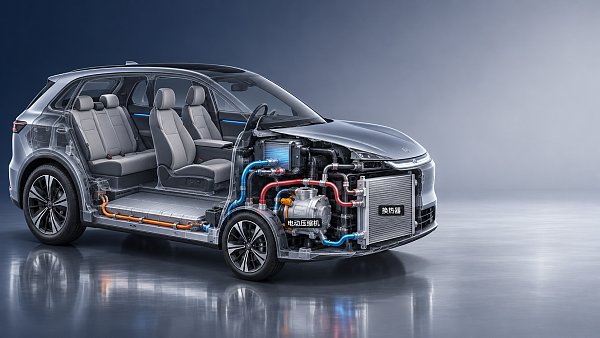
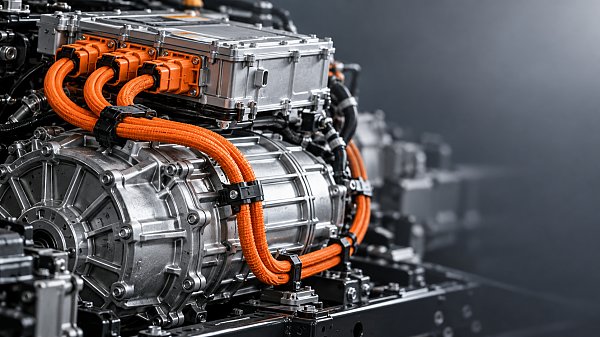
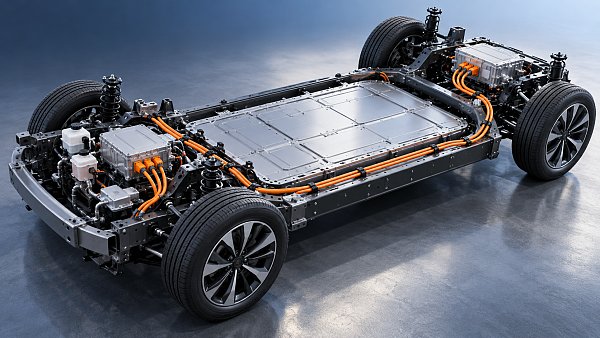
This becomes more relevant as high-voltage architecture expands beyond the traction battery. EV and hybrid vehicles may use high-voltage cables and connectors around battery packs, inverter assemblies, e-axles, electric compressors, PTC heaters, charging systems, and thermal-management components. A warning label is only one layer of protection, but it is a visible and durable layer that should not be treated as an afterthought.
Start with the hazard and the real viewing condition
Before comparing materials or adhesive types, define what the label is expected to communicate. Is it intended to warn of an energized high-voltage circuit, identify a harness as part of the HV system, support safe servicing, or distinguish it from low-voltage wiring during manufacturing? These uses overlap, but they may require different label sizes, locations, wording, or visual treatments.
A label applied to a battery-to-inverter cable in an underbody area faces a very different environment from one applied to a cabin harness near an electric HVAC unit. In the first case, moisture, stone impact, salt exposure, road debris, cleaning fluids, vibration, and temperature swings may dominate the decision. In the second, abrasion from nearby trims, heat from adjacent components, limited sightlines, and cabin material compatibility may matter more.
Visibility should be judged after the harness is installed, not only on a supplier’s sample board. A perfectly printed warning label offers little protection if it turns toward the vehicle floor, sits beneath a clip, is covered by a protective sleeve, or disappears behind a service panel. Quality teams should inspect the assembled condition from the likely viewpoint of a technician rather than relying only on the drawing position.
It is also worth separating the label’s purpose from the orange coloration commonly associated with high-voltage wiring. Orange cable insulation can provide broad system identification, while a warning label may provide a more explicit hazard cue. One should not automatically be assumed to replace the other. The vehicle program’s safety concept and applicable requirements need to define the relationship.
Choose the warning graphic before choosing the substrate
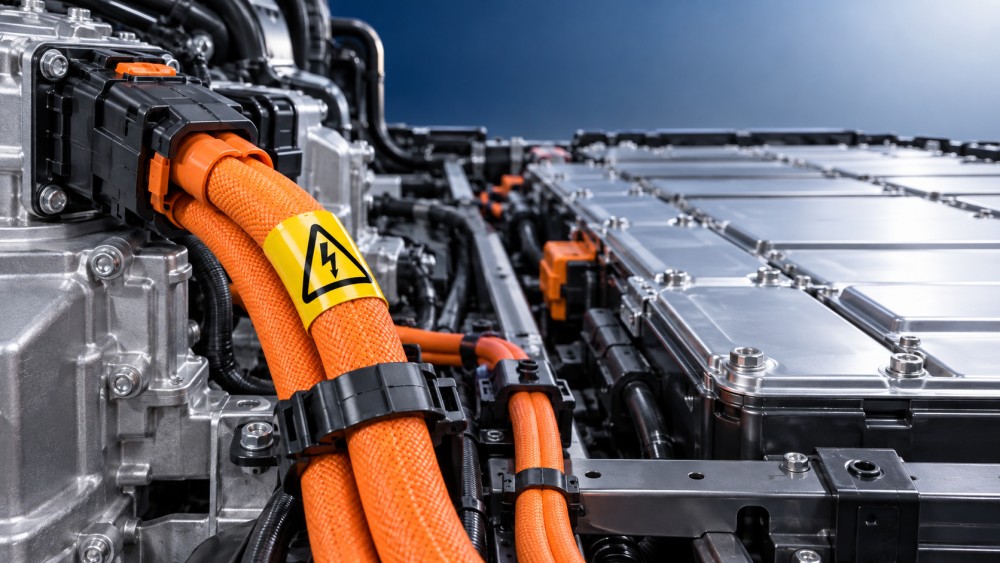
The visual message needs to be immediately recognizable. In many automotive programs, warning labels use a triangular warning sign with a black electrical hazard symbol on a yellow background. The exact symbol geometry, contrast, border, wording, and color specification should be confirmed against the vehicle manufacturer’s technical standard and the requirements of the intended sales market.
International references such as ISO 3864 and ISO 7010 are often relevant when safety colors and graphical warning symbols are being evaluated. However, they do not eliminate the need to check program-specific requirements. Regulations and OEM specifications may address where high-voltage identification is required on a vehicle, while the harness supplier’s drawing may define a particular label format, part number, or approval path. A global platform may be sold into Europe, North America, China, Japan, Korea, India, or other markets with different documentation and vehicle-approval expectations.
Avoid adding text merely because there is available space. Multilingual wording can become too small to read, especially on a narrow cable or connector backshell. If text is required, it should remain legible at the normal viewing distance and should not crowd out the core hazard symbol. A concise, approved message is generally more useful than a dense block of warnings that becomes unreadable after installation.
Material selection is an environmental engineering decision
The face stock, print method, overlaminate, and adhesive must be considered as one system. A label may look durable because the film is thick, yet still fail because the adhesive is incompatible with the harness jacket. Conversely, an excellent adhesive cannot compensate for ink that loses contrast under heat, UV exposure, or chemical contact.
Common label constructions include polyester, polyimide, polypropylene, vinyl, and other engineered films. None is universally correct. Polyester is often considered where dimensional stability and print durability are needed. Polyimide may be considered for demanding high-temperature situations. Softer films can conform well to certain curved surfaces but may be less suitable where abrasion or harsh fluids are expected. The specification should be based on validated performance in the relevant harness zone, not on a generic claim that a material is “automotive grade.”
The surface being labeled matters just as much. Cable jackets may be made from materials with different surface energies, plasticizer content, textures, and mold-release residues. Labels intended for smooth conduit, corrugated tubing, braided sleeving, connector housings, or direct cable application need separate evaluation. A label that adheres reliably to a flat PA housing may not survive on a flexible elastomeric cable jacket that expands, bends, and twists in service.
Ask the label supplier to define the recommended application window. Temperature at application, surface cleanliness, pressure during application, cure time, and rework rules can all influence bond strength. In a fast-moving harness line, operators may apply labels before a surface has fully dried after cleaning or when ambient conditions vary. If the process cannot consistently meet the supplier’s application conditions, the material choice or assembly sequence needs to change.
What should be tested for the installed location?
A useful validation plan reflects the actual exposure profile rather than a generic checklist. Depending on the location, it may need to examine thermal aging, thermal shock, humidity, water immersion or splash, salt exposure, vibration, flexing, abrasion, automotive fluids, cleaning agents, UV exposure, and resistance to service handling. The final acceptance criteria should address both adhesion and message readability. A label that remains attached but has a washed-out symbol is not an acceptable outcome.
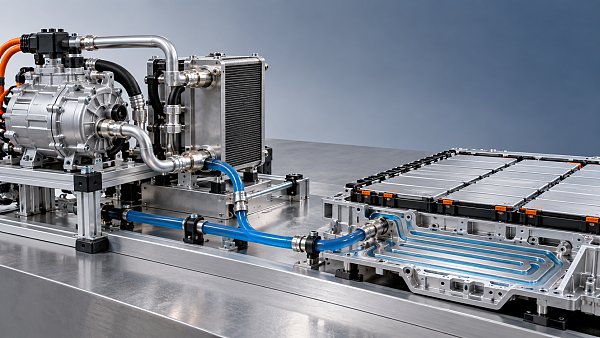
This is especially important around electrified thermal systems. High-voltage electric compressors, coolant heaters, battery cooling modules, valves, and heat-pump circuits can bring harnesses close to heat sources, condensate, coolant connections, and maintenance areas. The label selection should be reviewed alongside the cable routing, clips, protective conduits, and nearby fluid interfaces.
Adhesion is not the same as permanence
Many incoming inspections focus on whether a label can be peeled off immediately after application. That is useful, but it does not predict long-term performance. Adhesive failure may appear months later when cable flexing, plasticizer migration, temperature cycling, chemical exposure, or edge lifting has gradually weakened the bond.
For harnesses that bend repeatedly, a full-wrap label can create stress at its overlap and edges. A smaller flag label, a protected marker sleeve, or a label applied to a rigid nearby component may be more reliable in some designs. However, relocating the warning creates a visibility question: will the hazard still be apparent to a person approaching the harness? The design team should weigh retention, readability, and service access together.
Another practical issue is label migration. On some cable surfaces, an adhesive may remain tacky enough to collect dust or shift under heat. This can make the label look poor even before functional failure occurs. Sample builds should include ordinary handling: clipping, routing through body apertures, contact with gloves, protective tape removal, and assembly fixture contact. Real process abuse often exposes weaknesses that laboratory coupons do not.
Define placement as a controlled characteristic
A high voltage warning label should have a controlled location in the harness drawing or work instruction, with a defined orientation and tolerance where necessary. “Apply near connector” leaves too much room for variation. It can result in labels facing opposite directions, disappearing under tape, or being placed on sections that are later covered by a boot or bracket.
Placement decisions should account for the harness’s service state, not only the vehicle’s factory state. During repair, covers may be removed, connectors may be disconnected, and portions of the harness may be repositioned. A label that is hidden in the assembled vehicle may become visible in a service procedure; that may be acceptable if it matches the intended safety communication. The point is to make the choice deliberately and document it.
For long high-voltage runs, one label may not be enough. The required identification interval, if any, should come from the applicable design rule, customer specification, or market requirement. Adding labels at arbitrary intervals can increase cost and create quality variation without materially improving safety. The appropriate approach is a location-based risk review: accessible junctions, transitions between protected and exposed routing, service disconnect areas, and interfaces with major HV components usually deserve particular attention.
Build compliance review into sourcing, not after PPAP or launch
Warning-label requirements can sit across several disciplines: vehicle safety engineering, electrical architecture, harness design, manufacturing engineering, regulatory affairs, and purchasing. Problems arise when procurement receives only a visual artwork and a quantity forecast. A complete sourcing package should include the approved artwork, dimensions, substrate and adhesive construction where controlled, application surface, intended location, environmental exposure, traceability expectations, and any required validation evidence.
Where vehicles are exported, ask early whether a single label design can serve all intended markets. The answer may depend on the symbol, language requirements, vehicle category, and OEM policy. It is safer to treat this as a compliance question for the project team than to assume that a label accepted in one region will automatically satisfy another.
Change control deserves equal attention. A seemingly harmless supplier substitution—different ink, adhesive, laminate, or print process—can alter chemical resistance and color retention. The label should be listed as a controlled component when its safety function, regulatory relevance, or specified performance makes that appropriate. Incoming checks may include artwork, color appearance, dimensions, barcode or traceability content where used, and lot documentation, but periodic durability confirmation is often more informative than appearance checks alone.
Questions that expose weak label specifications
- Which exact surface will receive the label, and has that surface been represented in validation testing?
- Will the label remain visible after conduit, clips, covers, and neighboring components are installed?
- What fluids, temperatures, abrasion sources, and cleaning processes will the location experience?
- Does the specified warning symbol and any wording match the relevant OEM and destination-market requirements?
- Can production consistently meet the label supplier’s required surface preparation and application conditions?
- What happens if the label must be reworked: is replacement controlled, and can an incorrect or duplicate label be prevented?
These questions also help distinguish a well-engineered warning marker from a low-cost visual substitute. The cheapest label is rarely the lowest-risk choice if it leads to field degradation, rework, audit findings, or confusion during service operations.
Make the decision in the context of the whole HV system
High-voltage harness safety is connected to more than cable labels. Connector keying, shielding, insulation design, interlock circuits, routing protection, orange cable identification, service information, and vehicle-level warning markings all contribute to the final safety strategy. The label must fit that system rather than attempting to compensate for poor routing or unclear service design.
For teams comparing harness and component solutions across markets, it helps to review marking decisions alongside the wider vehicle architecture. GACT’s coverage of high-voltage harnesses, battery thermal systems, electric compressors, cockpit electronics, and chassis technologies can support that broader view: component changes often affect installation conditions, service access, and the environments in which warning markings must survive.
The final selection should be documented as a traceable engineering decision: approved graphic, target surface, placement, exposure profile, application process, validation method, and market review status. If any of those fields is missing, the label is not yet fully specified. A warning that remains clear and attached through vehicle life is not created by artwork alone; it comes from treating the label as a small but safety-relevant part of the EV harness design.
Have questions about this sector analysis, or seeking best practices specific to your niche? Drop us a line below and let the senior consultants at GAC assist you.
“We respect your privacy. Your information is strictly confidential.”
Related News
- 00
0000-00
How does a shielded HSD cable reduce interference in vehicles? - 00
0000-00
What drives demand for scroll compressors in the automotive market? - 00
0000-00
Does AEC-Q200 apply to flexible printed circuits? - 00
0000-00
How does production volume affect automotive flexible electronics costs? - 00
0000-00
How much does an in-vehicle infotainment system cost to replace?
Weekly Insights
Stay ahead with our curated technology reports delivered every Monday.
Recommended News
 How does a shielded HSD cable reduce interference in vehicles?Discover how a shielded HSD cable reduces vehicle interference, and learn why connector design, routing, and testing matter for reliable high-speed data links.Author:Time:Nov 17, 2026
 What drives demand for scroll compressors in the automotive market?Explore the scroll compressor for automobile market and discover how EV adoption, heat pumps, efficiency, and supplier capabilities shape demand.Author:Time:Nov 16, 2026
 Does AEC-Q200 apply to flexible printed circuits?Flexible Printed Circuit AEC-Q200 requirements explained: discover which components qualify and how to assess automotive FPC reliability.Author:Time:Nov 15, 2026
 How does production volume affect automotive flexible electronics costs?Explore how production volume affects automotive flexible electronics cost, from tooling and yield to testing. Compare quotes and negotiate smarter.Author:Time:Nov 14, 2026
 How much does an in-vehicle infotainment system cost to replace?Explore in-vehicle infotainment cost, from affordable repairs to factory replacements. Compare options, installation fees, and compatibility before you buy.Author:Time:Nov 13, 2026
 How does condenser efficiency affect heat pump performance?Discover how condenser high efficiency can improve heat pump performance, reduce compressor power, and boost heating COP—plus the trade-offs to watch.Author:Time:Nov 12, 2026
 What does each FAKRA cable color code mean?FAKRA cable color code explained: Explore common connector colors, typical uses and key compatibility checks before choosing a replacement.Author:Time:Nov 11, 2026
 How to compare noise ratings for battery coolant pumpsCompare coolant pump low noise ratings with confidence. Learn how test conditions, hydraulic duty, tonal noise and installation affect your choice.Author:Time:Nov 10, 2026
 How bright should automotive display systems be in sunlight?Automotive Display Systems need more than brightness to stay readable in sunlight. Discover why 1,000 nits is a starting point and how to evaluate glare and heat.Author:Time:Nov 09, 2026
 How heat pumps improve the efficiency of EV thermal systemsEV Thermal Systems use heat pumps to reduce heating energy demand. Explore how they work, where they excel, and what limits efficiency in cold weather.Author:Time:Nov 08, 2026
 Can a smart cockpit platform support multiple displays?Can a smart cockpit platform support multiple displays? Explore key requirements for performance, safety, connectivity, and supplier evaluation.Author:Time:Nov 07, 2026
 How is automotive connector vibration resistance tested?Automotive connector vibration resistance testing reveals hidden contact failures. Explore test profiles, continuity monitoring and pass criteria.Author:Time:Nov 06, 2026
 How heat pumps save energy in automotive cabin climate systemsAutomotive Cabin Climate Systems energy saving starts with smarter heat pump design. Explore real-world efficiency, cold-weather trade-offs, and testing tips.Author:Time:Nov 05, 2026
 Is an EV heat pump worth it for winter driving range?Is a heat pump worth using in a cold-climate EV? Discover how it affects winter range, when it pays off, and what to check before buying.Author:Time:Nov 04, 2026
 When should you use 50-ohm coaxial cable instead of 75-ohm?Coaxial cable 50 ohm or 75 ohm? Learn when to use each, avoid impedance mismatches, and choose the right cable for reliable RF and video performance.Author:Time:Nov 03, 2026
 How to select a high temperature motor harness for an EVChoose the right high temperature motor harness for your EV. Compare thermal limits, current capacity, shielding, routing, and validation evidence.Author:Time:Nov 02, 2026
 How much does electric power steering replacement cost?Electric power steering price typically ranges from $1,000 to $3,000 for major replacements. Discover cost factors, repair options, and tips for comparing quotes.Author:Time:Nov 01, 2026
 How to size an EV A/C compressor for the required cooling capacitySize an EV A/C Compressor with confidence. Explore cooling loads, performance maps and power limits to select the right compressor for your vehicle.Author:Time:Oct 31, 2026
 How to choose the right pitch for an FPC board connectorFPC board connector pitch affects space, assembly and reliability. Learn how to compare options and select the best fit for your design.Author:Time:Oct 30, 2026
 How zonal design affects harness routing in high-voltage EV architecturesExplore high-voltage electrical architecture zonal design and its impact on EV harness routing. Discover key trade-offs in cable length, safety, thermal performance, and service access.Author:Time:Oct 29, 2026
 How tariffs affect costs in global automotive parts supply chainsNavigate tariffs in the global automotive parts trade supply chain. Learn to compare landed costs, manage duty exposure, and uncover smarter sourcing strategies to protect your margins.Author:Time:Oct 28, 2026
 How to assess vendor lock-in in a software-defined vehicle platformAssess Software-Defined Vehicle platform lock-in with practical tests for API portability, data access, update control, and exit costs. Learn how to choose a platform with a proven exit path.Author:Time:Oct 27, 2026
 How ISO 26262 guides functional safety in steer-by-wire systemsExplore steering systems functional safety through ISO 26262. Learn how hazard analysis, fault-tolerant design, and validation build a stronger steer-by-wire safety case.Author:Time:Oct 26, 2026
 How to evaluate a steering angle sensor manufacturer's accuracy claimsEvaluate steering angle sensor manufacturer accuracy claims with practical checks on calibration, latency, and test evidence. Compare suppliers confidently and avoid costly selection mistakes.Author:Time:Oct 25, 2026
 How to diagnose CAN bus faults in a hybrid vehicle control unitDiagnose Hybrid Vehicle Systems control unit CAN bus faults with step-by-step power, wiring, and waveform checks. Find the root cause and avoid unnecessary replacement.Author:Time:Oct 24, 2026
 How does battery cooling pipe diameter affect coolant pressure drop?Battery Cooling Pipe diameter affects coolant pressure drop and pump power. Explore sizing calculations and practical tips to optimize EV battery cooling and compare options with confidence.Author:Time:Oct 23, 2026
 How to assess PPAP readiness of automotive sensor system manufacturersAssess Automotive Sensor Systems manufacturers for PPAP readiness. Learn to verify production evidence, measurement capability, validation, and traceability to reduce sourcing risks.Author:Time:Oct 22, 2026
 What to ask an FPC connector manufacturer about reliability testingChoosing an FPC Connector manufacturer? Learn what to ask about reliability testing, failure limits, and traceable results to reduce design risks and select with confidence.Author:Time:Oct 21, 2026
 How to verify vehicle fitment for an aftermarket AC evaporatorNavigating the evaporator aftermarket? Verify vehicle fitment with VIN data, OE numbers, and physical interface checks. Use this guide to avoid costly mismatches and order confidently.Author:Time:Oct 20, 2026
 How electric compressor speed affects EV battery cooling capacityElectric compressor technology: battery cooling depends on more than RPM. Discover how speed, refrigerant flow, and system limits affect EV cooling capacity and energy efficiency.Author:Time:Oct 19, 2026