Automotive Ethernet Systems Supplier Japan: What to Check Before Shortlisting




Why does an Automotive Ethernet Systems supplier Japan need deeper evaluation?
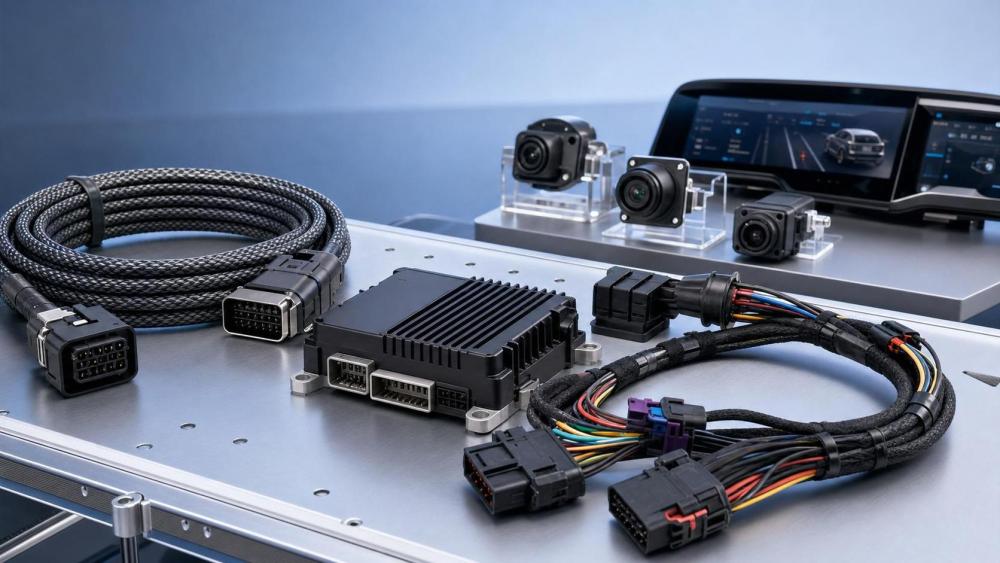
Shortlisting an Automotive Ethernet Systems supplier Japan is rarely a simple price exercise. Ethernet now sits closer to core vehicle architecture, not just a cable decision.
That matters because modern platforms connect cockpit displays, ADAS sensors, domain controllers, gateways, cameras, and high-speed communication networks through tighter data requirements.
In practical sourcing work, the bigger risk is not unit cost. The bigger risk is choosing a supplier that fits today’s sample stage but fails during validation or ramp-up.
A strong Automotive Ethernet Systems supplier Japan should be assessed through quality discipline, protocol support, connector and cable integration, engineering response, and production continuity.
This is also where broader component intelligence becomes useful. Platforms such as GACT track wiring, smart cockpit electronics, high-voltage architecture, and vehicle communication trends across major automotive markets.
That wider view helps buyers avoid evaluating Ethernet in isolation. In many projects, Ethernet performance depends on how it works with harness layouts, FPC solutions, displays, cameras, and control units.
What should be confirmed before a supplier even enters the shortlist?
The first filter should answer one question: can this supplier support automotive-grade deployment, not just laboratory-level transmission performance?
A capable Automotive Ethernet Systems supplier Japan usually shows evidence in several areas at once, and gaps in one area often create later cost elsewhere.
- Compliance with automotive quality systems such as IATF 16949 and disciplined APQP, PPAP, traceability, and change control.
- Support for required Ethernet standards, speeds, physical layer options, and EMC expectations tied to actual vehicle programs.
- Proven experience with connectors, cables, harness routing, and packaging limits inside cockpit, body, and chassis environments.
- Clear sample lead times, validation support, and escalation paths when testing exposes signal integrity or compatibility issues.
- Production planning that covers resin, terminals, shielding materials, and second-source resilience where possible.
Need to check one more thing early? Ask whether the supplier’s current business is concentrated in prototypes, aftermarket, or genuine vehicle programs.
That distinction changes everything. A supplier familiar with serial automotive launches usually handles audits, revisions, and documentation with far less friction.
A quick screening table for early conversations
Before requesting detailed quotations, a compact comparison table can reveal whether an Automotive Ethernet Systems supplier Japan deserves a technical review meeting.
How do you judge technical fit beyond the datasheet?
This is where many shortlists become misleading. Two suppliers can quote similar bandwidth, yet only one may fit the full vehicle communication stack.
For an Automotive Ethernet Systems supplier Japan, the key is system compatibility. Review the physical layer, connector format, shielding approach, and harness integration together.
In actual vehicle programs, Ethernet rarely works alone. It interacts with domain controllers, infotainment modules, cameras, HUD systems, cockpit displays, and data cables.
That is why buyers should ask for application references by vehicle function, not just by generic product category.
- Has the supplier supported in-vehicle cameras or ADAS links?
- Do they understand smart cockpit packaging and display-driven bandwidth needs?
- Can they advise on routing inside dense harness environments?
- Do they coordinate with high-voltage or low-voltage architecture constraints?
A useful sign is whether the supplier can explain tradeoffs clearly. For example, they should discuss shielding, bend radius, EMC margin, connector durability, and assembly feasibility without drifting into vague marketing language.
GACT’s broader coverage of wiring harnesses, communication cables, cockpit electronics, and electrified vehicle architecture reflects why this cross-domain view matters during supplier evaluation.
What risks are often missed when comparing Japanese suppliers?
The common mistake is assuming that a reputable supplier name automatically guarantees program fit. In reality, sourcing risk often hides in operational details.
One overlooked risk is engineering bandwidth. A technically strong Automotive Ethernet Systems supplier Japan may still struggle if support teams are stretched across several launches.
Another risk sits in revision control. Vehicle networking requirements change during development, especially when cockpit, ADAS, and gateway functions are still being optimized.
If change management is weak, sample approvals can become unreliable, and later validation results may no longer match released drawings.
Lead time assumptions also deserve scrutiny. Some suppliers quote attractive prototypes but rely on longer procurement windows for production-grade terminals or specialty materials.
Then there is localization risk. If production, testing, and account management sit in different locations, communication delay can affect issue closure speed.
A practical way to catch these issues is to ask for one recent program example covering design freeze, validation, engineering change, and SOP support.
Warning signs that deserve a second look
- Answers stay at catalog level and never reach vehicle application detail.
- Testing evidence exists, but sample configuration is unclear.
- Engineering contacts change frequently during early discussions.
- There is no clear process for deviation approval or design updates.
- Capacity claims sound strong, yet raw material coverage is not explained.
How should cost, timing, and long-term roadmap fit into the decision?
Cost should be read as total program cost, not only piece price. A lower quote can become expensive if testing repeats, packaging fails, or integration support is weak.
When reviewing an Automotive Ethernet Systems supplier Japan, compare cost against engineering input, validation readiness, and launch confidence.
Timing deserves the same discipline. Ask for separate timelines for RFQ response, prototype delivery, DV support, PV support, and mass production readiness.
Long-term fit is becoming more important as zonal architectures, software-defined vehicles, smart cockpit upgrades, and sensor-rich platforms expand data traffic needs.
In other words, the right supplier should support today’s architecture while remaining credible for the next platform cycle.
This is where market intelligence helps. Tracking standards, export patterns, vehicle electronics shifts, and component evolution gives buyers a better basis for long-horizon decisions.
That is consistent with GACT’s role in connecting supply chain intelligence, technology movement, and application analysis across the global automotive components sector.
So what is the smartest next step before formal evaluation begins?
Start by narrowing the technical scope. Define required Ethernet speed, connector form, environmental exposure, harness constraints, and target vehicle functions.
Then build a shortlist using comparable evidence, not mixed-level claims. Every Automotive Ethernet Systems supplier Japan should be reviewed against the same checkpoints.
A practical shortlist package usually includes:
- Required standards and application scenarios.
- Expected sample and SOP timing.
- Quality and traceability expectations.
- Validation documents to be submitted.
- Engineering response and issue management expectations.
From there, compare which supplier explains risks honestly, supports integration with adjacent systems, and demonstrates repeatable launch discipline.
A sound shortlist is not the one with the most impressive presentation. It is the one that reduces uncertainty before the formal sourcing process begins.
For better decisions, align technical needs with supply reliability, roadmap fit, and cross-component intelligence. That creates a far more durable basis for supplier selection.
Have questions about this sector analysis, or seeking best practices specific to your niche? Drop us a line below and let the senior consultants at GAC assist you.
“We respect your privacy. Your information is strictly confidential.”
Related News
- 00
0000-00
How to assess a smart cockpit electronics manufacturer's integration capability - 00
0000-00
How does a shielded HSD cable reduce interference in vehicles? - 00
0000-00
What drives demand for scroll compressors in the automotive market? - 00
0000-00
Does AEC-Q200 apply to flexible printed circuits? - 00
0000-00
How does production volume affect automotive flexible electronics costs?
Weekly Insights
Stay ahead with our curated technology reports delivered every Monday.
Recommended News
 How to assess a smart cockpit electronics manufacturer's integration capabilityAssess a smart cockpit electronics manufacturer's integration capability with practical checks for interfaces, testing, safety, cybersecurity and supplier support.Author:Time:Nov 18, 2026
 How does a shielded HSD cable reduce interference in vehicles?Discover how a shielded HSD cable reduces vehicle interference, and learn why connector design, routing, and testing matter for reliable high-speed data links.Author:Time:Nov 17, 2026
 What drives demand for scroll compressors in the automotive market?Explore the scroll compressor for automobile market and discover how EV adoption, heat pumps, efficiency, and supplier capabilities shape demand.Author:Time:Nov 16, 2026
 Does AEC-Q200 apply to flexible printed circuits?Flexible Printed Circuit AEC-Q200 requirements explained: discover which components qualify and how to assess automotive FPC reliability.Author:Time:Nov 15, 2026
 How does production volume affect automotive flexible electronics costs?Explore how production volume affects automotive flexible electronics cost, from tooling and yield to testing. Compare quotes and negotiate smarter.Author:Time:Nov 14, 2026
 How much does an in-vehicle infotainment system cost to replace?Explore in-vehicle infotainment cost, from affordable repairs to factory replacements. Compare options, installation fees, and compatibility before you buy.Author:Time:Nov 13, 2026
 How does condenser efficiency affect heat pump performance?Discover how condenser high efficiency can improve heat pump performance, reduce compressor power, and boost heating COP—plus the trade-offs to watch.Author:Time:Nov 12, 2026
 What does each FAKRA cable color code mean?FAKRA cable color code explained: Explore common connector colors, typical uses and key compatibility checks before choosing a replacement.Author:Time:Nov 11, 2026
 How to compare noise ratings for battery coolant pumpsCompare coolant pump low noise ratings with confidence. Learn how test conditions, hydraulic duty, tonal noise and installation affect your choice.Author:Time:Nov 10, 2026
 How bright should automotive display systems be in sunlight?Automotive Display Systems need more than brightness to stay readable in sunlight. Discover why 1,000 nits is a starting point and how to evaluate glare and heat.Author:Time:Nov 09, 2026
 How heat pumps improve the efficiency of EV thermal systemsEV Thermal Systems use heat pumps to reduce heating energy demand. Explore how they work, where they excel, and what limits efficiency in cold weather.Author:Time:Nov 08, 2026
 Can a smart cockpit platform support multiple displays?Can a smart cockpit platform support multiple displays? Explore key requirements for performance, safety, connectivity, and supplier evaluation.Author:Time:Nov 07, 2026
 How is automotive connector vibration resistance tested?Automotive connector vibration resistance testing reveals hidden contact failures. Explore test profiles, continuity monitoring and pass criteria.Author:Time:Nov 06, 2026
 How heat pumps save energy in automotive cabin climate systemsAutomotive Cabin Climate Systems energy saving starts with smarter heat pump design. Explore real-world efficiency, cold-weather trade-offs, and testing tips.Author:Time:Nov 05, 2026
 Is an EV heat pump worth it for winter driving range?Is a heat pump worth using in a cold-climate EV? Discover how it affects winter range, when it pays off, and what to check before buying.Author:Time:Nov 04, 2026
 When should you use 50-ohm coaxial cable instead of 75-ohm?Coaxial cable 50 ohm or 75 ohm? Learn when to use each, avoid impedance mismatches, and choose the right cable for reliable RF and video performance.Author:Time:Nov 03, 2026
 How to select a high temperature motor harness for an EVChoose the right high temperature motor harness for your EV. Compare thermal limits, current capacity, shielding, routing, and validation evidence.Author:Time:Nov 02, 2026
 How much does electric power steering replacement cost?Electric power steering price typically ranges from $1,000 to $3,000 for major replacements. Discover cost factors, repair options, and tips for comparing quotes.Author:Time:Nov 01, 2026
 How to size an EV A/C compressor for the required cooling capacitySize an EV A/C Compressor with confidence. Explore cooling loads, performance maps and power limits to select the right compressor for your vehicle.Author:Time:Oct 31, 2026
 How to choose the right pitch for an FPC board connectorFPC board connector pitch affects space, assembly and reliability. Learn how to compare options and select the best fit for your design.Author:Time:Oct 30, 2026
 How zonal design affects harness routing in high-voltage EV architecturesExplore high-voltage electrical architecture zonal design and its impact on EV harness routing. Discover key trade-offs in cable length, safety, thermal performance, and service access.Author:Time:Oct 29, 2026
 How tariffs affect costs in global automotive parts supply chainsNavigate tariffs in the global automotive parts trade supply chain. Learn to compare landed costs, manage duty exposure, and uncover smarter sourcing strategies to protect your margins.Author:Time:Oct 28, 2026
 How to assess vendor lock-in in a software-defined vehicle platformAssess Software-Defined Vehicle platform lock-in with practical tests for API portability, data access, update control, and exit costs. Learn how to choose a platform with a proven exit path.Author:Time:Oct 27, 2026
 How ISO 26262 guides functional safety in steer-by-wire systemsExplore steering systems functional safety through ISO 26262. Learn how hazard analysis, fault-tolerant design, and validation build a stronger steer-by-wire safety case.Author:Time:Oct 26, 2026
 How to evaluate a steering angle sensor manufacturer's accuracy claimsEvaluate steering angle sensor manufacturer accuracy claims with practical checks on calibration, latency, and test evidence. Compare suppliers confidently and avoid costly selection mistakes.Author:Time:Oct 25, 2026
 How to diagnose CAN bus faults in a hybrid vehicle control unitDiagnose Hybrid Vehicle Systems control unit CAN bus faults with step-by-step power, wiring, and waveform checks. Find the root cause and avoid unnecessary replacement.Author:Time:Oct 24, 2026
 How does battery cooling pipe diameter affect coolant pressure drop?Battery Cooling Pipe diameter affects coolant pressure drop and pump power. Explore sizing calculations and practical tips to optimize EV battery cooling and compare options with confidence.Author:Time:Oct 23, 2026
 How to assess PPAP readiness of automotive sensor system manufacturersAssess Automotive Sensor Systems manufacturers for PPAP readiness. Learn to verify production evidence, measurement capability, validation, and traceability to reduce sourcing risks.Author:Time:Oct 22, 2026
 What to ask an FPC connector manufacturer about reliability testingChoosing an FPC Connector manufacturer? Learn what to ask about reliability testing, failure limits, and traceable results to reduce design risks and select with confidence.Author:Time:Oct 21, 2026
 How to verify vehicle fitment for an aftermarket AC evaporatorNavigating the evaporator aftermarket? Verify vehicle fitment with VIN data, OE numbers, and physical interface checks. Use this guide to avoid costly mismatches and order confidently.Author:Time:Oct 20, 2026