Variable-Frequency Compressors: What Cuts Energy Loss?




Energy loss in compression systems rarely comes from a single defect. It usually comes from mismatch. When cooling demand changes but compressor output does not, power is wasted in start-stop cycling, unstable pressure control, and unnecessary peak-speed operation.
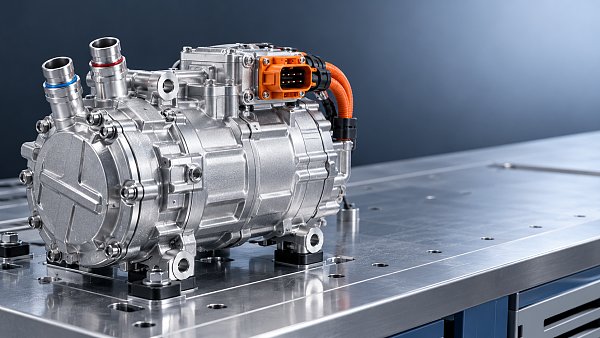
That is why variable-frequency compressors have become a focal point across automotive HVAC, NEV thermal management, and broader industrial cooling. Their core advantage is simple in concept but demanding in execution: motor speed follows real thermal load instead of forcing the system to run at one fixed point.
For platforms tracked by GACT, this matters beyond cabin comfort. Compressor efficiency now influences battery range, inverter load, NVH, thermal integration strategy, and even the architecture of smart heat-pump systems. The real question is not whether variable-frequency compressors save energy, but what exactly cuts the loss most effectively.
Where the energy loss really happens
The main losses in conventional compressor operation are often hidden in transitions, not steady-state operation. Fixed-speed units are efficient only near a narrow design point. Actual systems seldom stay there for long.
When load drops, a fixed-speed compressor still pushes near-full displacement. The result is cycling, throttling, pressure fluctuation, and repeated inrush current. Each event adds avoidable electrical and thermodynamic penalties.
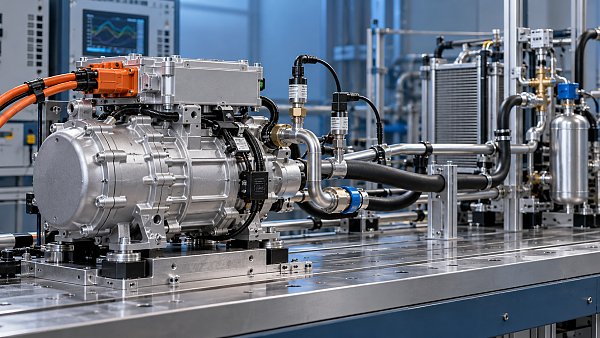
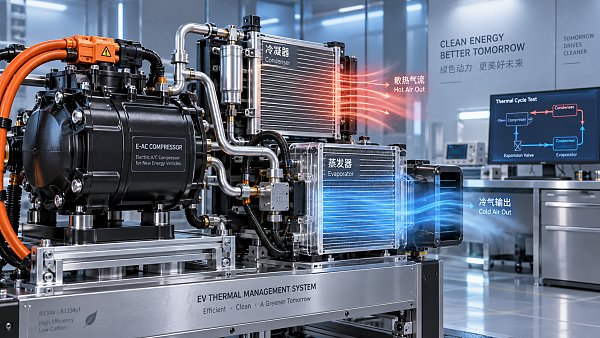
Variable-frequency compressors reduce these losses by changing rotational speed through inverter control. Instead of switching fully on or fully off, they operate across a range that better aligns refrigerant flow with evaporator, condenser, and heat-exchanger demand.
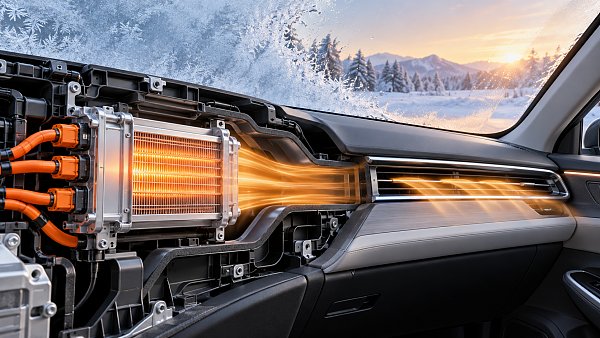
In automotive applications, that flexibility is especially valuable. Cabin load changes with solar radiation, occupancy, ambient temperature, battery cooling demand, and drive-cycle behavior. A compressor that cannot modulate becomes an energy liability.
Why speed matching delivers measurable gains
The biggest efficiency gain comes from avoiding over-compression. If the system only needs partial capacity, running at lower speed cuts both electrical input and mechanical friction.
This produces several linked benefits:
- less cycling loss from repeated starts and stops;
- lower inverter and motor stress during transient control;
- more stable evaporating and condensing pressures;
- reduced need for wasteful reheat or corrective control actions;
- better part-load COP across real operating windows.
Part-load behavior is the key point. Many thermal systems spend much more time at 30% to 70% load than at full load. Variable-frequency compressors are often selected not because they dominate peak conditions, but because they improve annual or drive-cycle efficiency.
That distinction matters for evaluation. A strong full-load specification does not automatically mean lower total energy loss in real service.
Control logic matters as much as compressor hardware
A variable-speed compressor without good control logic can still waste power. The hardware may be capable, yet the algorithm may chase unstable targets or react too late.
In advanced systems, compressor speed is not set by temperature alone. It is usually coordinated with pressure sensors, expansion-valve position, blower demand, battery thermal requests, and heat-pump mode switching.
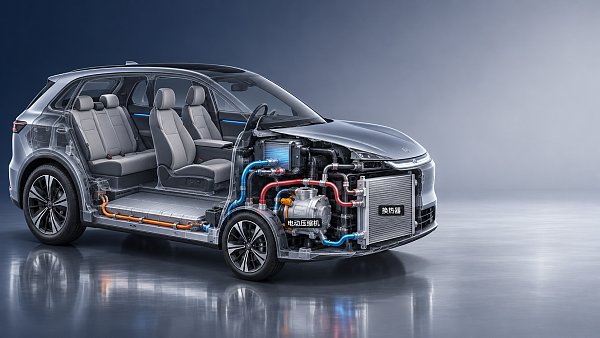
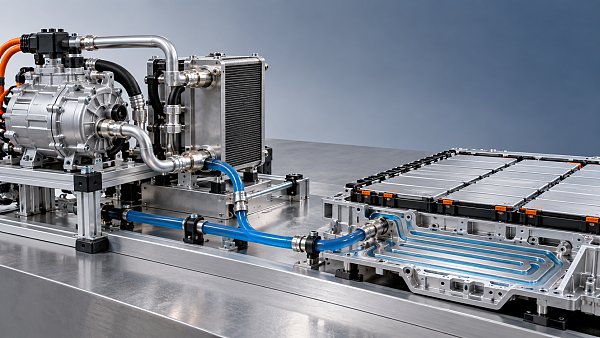
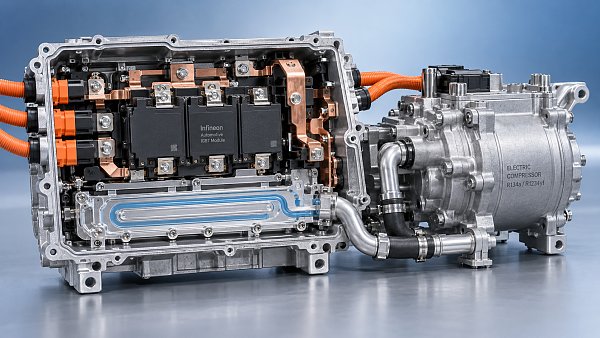
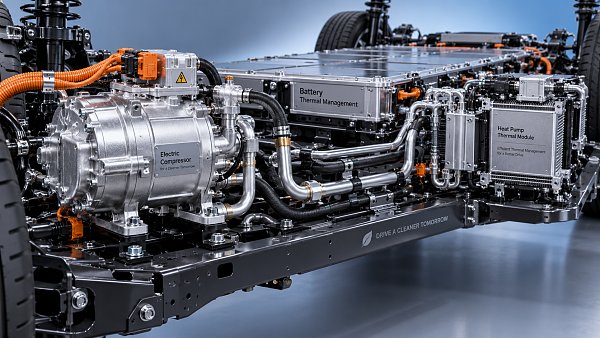
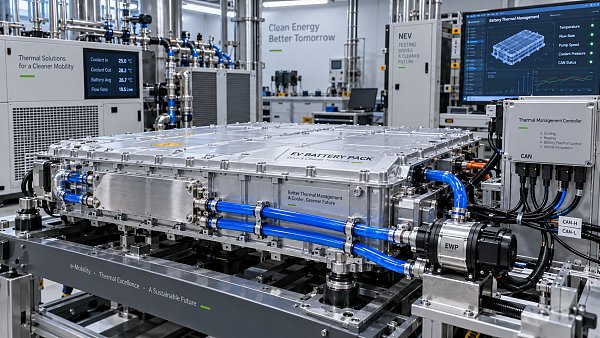
For NEV platforms, this becomes even more complex. The compressor may support cabin cooling, battery chiller loops, motor cooling support, and reversible heating functions in one integrated network.
That is one reason GACT places electric compressors inside a wider thermal-system intelligence context. Energy savings are not created by one component alone. They depend on how electrical signal control, fluid routing, and thermodynamic states are stitched together.
Control issues that often decide efficiency
- speed response lag during rapid load change;
- hunting caused by poor PID tuning or unstable sensor input;
- overly conservative safety margins that force higher speed;
- weak coordination with EXV, pump, fan, or valve control;
- inefficient mode transitions in heat-pump defrost or heating.
In practice, evaluating variable-frequency compressors means evaluating control strategy, not only compressor maps.
Automotive use cases are changing the benchmark
The automotive sector has shifted the conversation from basic cooling capacity to energy-managed thermal ecosystems. In internal combustion vehicles, compressor efficiency influenced fuel economy. In NEVs, it directly affects driving range and charging behavior.
Auto A/C compressors now operate alongside high-voltage harnesses, smart cabin electronics, and tightly packaged thermal modules. Lower energy loss supports not only efficiency but also system miniaturization and acoustic refinement.
A quiet, modulating electric compressor also helps cabin experience. Stable speed avoids the harsh engagement feel common in fixed-speed systems. That matters in premium EV cabins, where background noise is more noticeable.
Industrial and commercial HVAC applications show a similar pattern. Load volatility, zoning demand, and energy reporting requirements all favor variable-frequency compressors that can hold a tighter operating envelope with lower waste.
Typical evaluation scenarios
What should be checked beyond headline efficiency claims
Datasheets often highlight nominal COP, rated voltage, or maximum capacity. Those values are useful, but they do not reveal where energy loss is cut in real operation.
A stronger evaluation framework usually includes the following questions:
- How broad is the efficient speed range, not just the allowable range?
- What does compressor efficiency look like under common part-load points?
- How stable is performance after inverter, motor, and refrigerant heating effects?
- Does the control logic minimize hunting during fast ambient changes?
- How well does the unit integrate with valves, pumps, and domain control?
- What is the NVH profile at low, medium, and high modulation speeds?
- How much efficiency is lost in protection modes or degraded conditions?
This is where technical evaluation becomes more strategic. The best option is not always the compressor with the highest isolated peak number. It is often the one that produces the lowest system-level energy penalty across the real duty cycle.
System design choices that strengthen or weaken the benefit
Variable-frequency compressors perform best when the surrounding system is designed for modulation. If the rest of the circuit remains fixed and coarse, much of the theoretical gain is lost.
Refrigerant circuit design, heat-exchanger sizing, EXV response, oil management, and sensor placement all influence whether lower-speed operation remains efficient and reliable.
In highly integrated NEV thermal systems, multi-way valves and heat-pump architectures add another layer. Poor flow routing can force the compressor to work harder than necessary, even if the compressor itself is efficient.
Electrical architecture matters too. High-voltage supply quality, inverter switching strategy, harness losses, and EMC constraints shape real-world compressor behavior. GACT’s broader component view is relevant here because compressor efficiency can be diluted by losses outside the compressor shell.
How to read the next round of market signals
The market is moving toward more integrated, software-defined thermal platforms. That trend favors variable-frequency compressors with stronger control interoperability and better low-load efficiency.
Several signals deserve close attention:
- greater use of heat pumps in mainstream EV platforms;
- demand for compact thermal modules with fewer discrete components;
- tighter energy-consumption reporting and range expectations;
- higher emphasis on software calibration and domain control integration;
- ongoing material cost pressure affecting motor and inverter choices.
In that environment, variable-frequency compressors become less of a standalone component decision and more of an architecture decision. Their value depends on how well they fit the total thermal and electrical strategy.
A practical way to move from interest to judgment
The most useful next step is to compare operating maps, control behavior, and system interactions under realistic load profiles. Peak-capacity comparisons alone are too narrow.
For variable-frequency compressors, the decisive question is straightforward: where does the system spend most of its time, and how much loss is avoided there? The answer usually reveals more than a brochure headline.
A disciplined review of part-load efficiency, control stability, NVH, integration complexity, and thermal-module compatibility will make performance differences visible early. That is often the clearest path to selecting a compressor strategy that cuts energy loss in measurable, repeatable ways.
Have questions about this sector analysis, or seeking best practices specific to your niche? Drop us a line below and let the senior consultants at GAC assist you.
“We respect your privacy. Your information is strictly confidential.”
Related News
- 00
0000-00
Can a smart cockpit platform support multiple displays? - 00
0000-00
How is automotive connector vibration resistance tested? - 00
0000-00
How heat pumps save energy in automotive cabin climate systems - 00
0000-00
Is an EV heat pump worth it for winter driving range? - 00
0000-00
When should you use 50-ohm coaxial cable instead of 75-ohm?
Weekly Insights
Stay ahead with our curated technology reports delivered every Monday.
Recommended News
 Can a smart cockpit platform support multiple displays?Can a smart cockpit platform support multiple displays? Explore key requirements for performance, safety, connectivity, and supplier evaluation.Author:Time:Nov 07, 2026
 How is automotive connector vibration resistance tested?Automotive connector vibration resistance testing reveals hidden contact failures. Explore test profiles, continuity monitoring and pass criteria.Author:Time:Nov 06, 2026
 How heat pumps save energy in automotive cabin climate systemsAutomotive Cabin Climate Systems energy saving starts with smarter heat pump design. Explore real-world efficiency, cold-weather trade-offs, and testing tips.Author:Time:Nov 05, 2026
 Is an EV heat pump worth it for winter driving range?Is a heat pump worth using in a cold-climate EV? Discover how it affects winter range, when it pays off, and what to check before buying.Author:Time:Nov 04, 2026
 When should you use 50-ohm coaxial cable instead of 75-ohm?Coaxial cable 50 ohm or 75 ohm? Learn when to use each, avoid impedance mismatches, and choose the right cable for reliable RF and video performance.Author:Time:Nov 03, 2026
 How to select a high temperature motor harness for an EVChoose the right high temperature motor harness for your EV. Compare thermal limits, current capacity, shielding, routing, and validation evidence.Author:Time:Nov 02, 2026
 How much does electric power steering replacement cost?Electric power steering price typically ranges from $1,000 to $3,000 for major replacements. Discover cost factors, repair options, and tips for comparing quotes.Author:Time:Nov 01, 2026
 How to size an EV A/C compressor for the required cooling capacitySize an EV A/C Compressor with confidence. Explore cooling loads, performance maps and power limits to select the right compressor for your vehicle.Author:Time:Oct 31, 2026
 How to choose the right pitch for an FPC board connectorFPC board connector pitch affects space, assembly and reliability. Learn how to compare options and select the best fit for your design.Author:Time:Oct 30, 2026
 How zonal design affects harness routing in high-voltage EV architecturesExplore high-voltage electrical architecture zonal design and its impact on EV harness routing. Discover key trade-offs in cable length, safety, thermal performance, and service access.Author:Time:Oct 29, 2026
 How tariffs affect costs in global automotive parts supply chainsNavigate tariffs in the global automotive parts trade supply chain. Learn to compare landed costs, manage duty exposure, and uncover smarter sourcing strategies to protect your margins.Author:Time:Oct 28, 2026
 How to assess vendor lock-in in a software-defined vehicle platformAssess Software-Defined Vehicle platform lock-in with practical tests for API portability, data access, update control, and exit costs. Learn how to choose a platform with a proven exit path.Author:Time:Oct 27, 2026
 How ISO 26262 guides functional safety in steer-by-wire systemsExplore steering systems functional safety through ISO 26262. Learn how hazard analysis, fault-tolerant design, and validation build a stronger steer-by-wire safety case.Author:Time:Oct 26, 2026
 How to evaluate a steering angle sensor manufacturer's accuracy claimsEvaluate steering angle sensor manufacturer accuracy claims with practical checks on calibration, latency, and test evidence. Compare suppliers confidently and avoid costly selection mistakes.Author:Time:Oct 25, 2026
 How to diagnose CAN bus faults in a hybrid vehicle control unitDiagnose Hybrid Vehicle Systems control unit CAN bus faults with step-by-step power, wiring, and waveform checks. Find the root cause and avoid unnecessary replacement.Author:Time:Oct 24, 2026
 How does battery cooling pipe diameter affect coolant pressure drop?Battery Cooling Pipe diameter affects coolant pressure drop and pump power. Explore sizing calculations and practical tips to optimize EV battery cooling and compare options with confidence.Author:Time:Oct 23, 2026
 How to assess PPAP readiness of automotive sensor system manufacturersAssess Automotive Sensor Systems manufacturers for PPAP readiness. Learn to verify production evidence, measurement capability, validation, and traceability to reduce sourcing risks.Author:Time:Oct 22, 2026
 What to ask an FPC connector manufacturer about reliability testingChoosing an FPC Connector manufacturer? Learn what to ask about reliability testing, failure limits, and traceable results to reduce design risks and select with confidence.Author:Time:Oct 21, 2026
 How to verify vehicle fitment for an aftermarket AC evaporatorNavigating the evaporator aftermarket? Verify vehicle fitment with VIN data, OE numbers, and physical interface checks. Use this guide to avoid costly mismatches and order confidently.Author:Time:Oct 20, 2026
 How electric compressor speed affects EV battery cooling capacityElectric compressor technology: battery cooling depends on more than RPM. Discover how speed, refrigerant flow, and system limits affect EV cooling capacity and energy efficiency.Author:Time:Oct 19, 2026
 How to verify a variable frequency compressor supplier’s efficiency claimsVerify a variable frequency compressor supplier’s efficiency claims using COP boundaries, matched test conditions, and duty-cycle data. Learn how to choose with confidence.Author:Time:Oct 18, 2026
 How bend radius affects FPC reliability in automotive camera modulesAutomotive FPC applications: camera module reliability starts with bend radius. Learn how stack-up, strain, and validation guide robust designs and help prevent costly failures.Author:Time:Oct 17, 2026
 How to diagnose intermittent loss of electric power steering assistMaster power steering system diagnostics to trace intermittent EPS assist loss. Learn proven checks for voltage, wiring, and fault codes to avoid costly guesswork.Author:Time:Oct 16, 2026
 How to size automotive power modules for electric compressorsSize automotive power modules for electric compressors with confidence. Learn how voltage, phase current, losses, and cooling shape reliable selection—and avoid costly oversizing.Author:Time:Oct 15, 2026
 Why automotive power electronics are shifting to silicon carbideAutomotive Power Electronics are shifting to silicon carbide. Discover how SiC can cut losses, boost EV power density, and reshape cooling, reliability, and system costs.Author:Time:Oct 14, 2026
 How EV adoption shapes the electrically driven compressor marketExplore how EV adoption shapes the electrically driven compressor market, from battery cooling and heat pumps to supplier margins. Discover the drivers of profitable growth.Author:Time:Oct 13, 2026
 How to size a PTC heater for reliable EV cabin heatingPTC Heater sizing for EV cabins: learn how to balance defrost performance, heat-pump integration, airflow, voltage range, and battery power for reliable winter comfort.Author:Time:Oct 12, 2026
 What determines the cooling output of electric automotive AC compressors?Automotive air conditioning compressors electric systems: explore how speed, voltage, refrigerant, controls, and heat exchangers shape EV cooling capacity and efficiency.Author:Time:Oct 11, 2026
 What makes a touchscreen media head unit responsive enough for daily use?Touchscreen media head unit performance explained: discover what delivers fast starts, smooth maps, reliable phone pairing, and responsive daily driving.Author:Time:Oct 10, 2026
 How Does a Battery Management System Communicate Cooling Demand?How does a battery management system communicate cooling demand? Explore CAN signals, thermal priorities, fault handling, and EV cooling control strategies.Author:Time:Oct 20, 2026