Variable-Frequency Compressors: Cost vs. Efficiency




For procurement teams evaluating next-generation thermal management solutions, variable-frequency compressors present a critical cost-versus-efficiency decision.
As NEVs demand quieter operation, faster cabin cooling, and smarter energy use, buyers must look beyond unit price to assess lifecycle value, supplier capability, control integration, and reliability under real-world conditions.
This article explores how variable-frequency technology impacts total ownership cost, efficiency gains, and sourcing strategy in an increasingly competitive automotive supply chain.
What Procurement Teams Are Really Trying to Decide
The central question is not whether variable-frequency compressors are technically better. In most NEV applications, they already are.
The real procurement question is whether their higher acquisition cost is justified by measurable gains in energy efficiency, comfort, reliability, and platform competitiveness.
Buyers searching for variable-frequency compressors usually want practical answers, not generic technology descriptions or simplified comparisons with fixed-speed units.
They need to understand price drivers, supplier differences, failure risks, control compatibility, warranty exposure, and where efficiency gains become financially meaningful.
For automotive purchasing teams, the best sourcing decision balances component cost with vehicle-level value, especially in electric mobility platforms.
Why Variable-Frequency Compressors Matter More in NEVs
In internal combustion vehicles, the compressor was mechanically linked to engine operation, making energy optimization relatively limited and indirect.
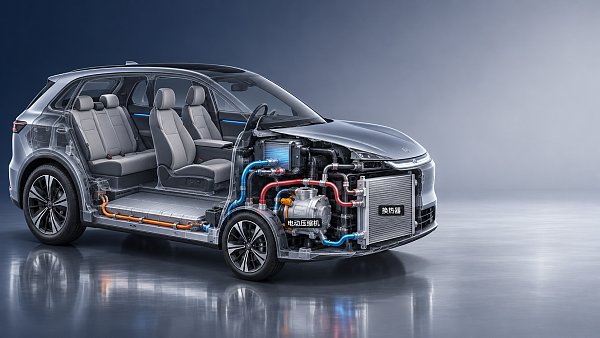
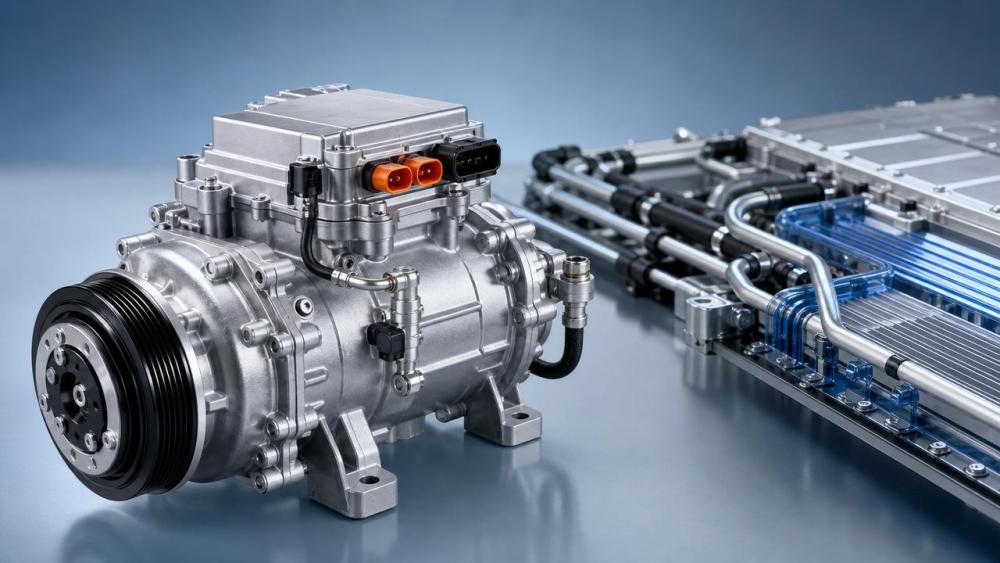
In NEVs, the electric compressor becomes an independent, software-controlled actuator within the broader thermal management system.
Variable-frequency compressors adjust rotational speed according to cooling demand, battery temperature, cabin load, and control strategy.
This flexibility allows the system to reduce unnecessary power consumption during partial-load operation, where vehicles spend much of their actual driving time.
For procurement teams, that means compressor selection can influence real-world driving range, charging comfort, defogging performance, and customer satisfaction.
The component is no longer a simple cooling device. It is part of the vehicle’s energy management architecture.
Cost: What Makes Variable-Frequency Compressors More Expensive?
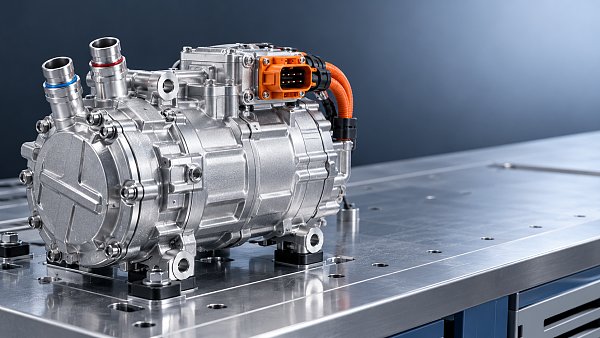
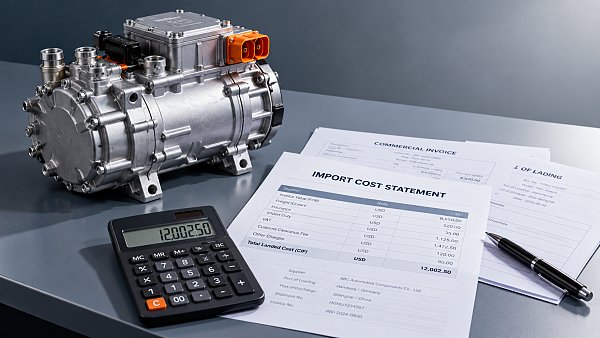
Variable-frequency compressors usually carry a higher upfront price because they combine mechanical compression, power electronics, motor control, and precision manufacturing.
The inverter, motor winding design, electronic control module, sensors, sealing system, and NVH optimization all add engineering and production cost.
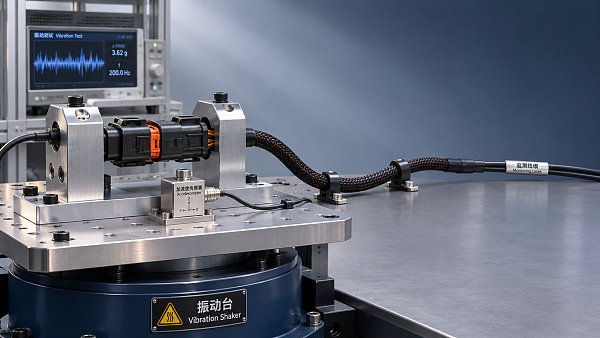
Automotive-grade reliability requirements also raise costs, especially for high-voltage insulation, electromagnetic compatibility, vibration resistance, and thermal endurance.
Procurement teams should avoid comparing only compressor shell price, because suppliers may bundle different levels of electronics, software, and validation support.
A lower quotation may exclude calibration assistance, communication protocol adaptation, diagnostic support, or long-cycle durability evidence.
In practice, the cheapest variable-frequency compressors may create hidden costs during integration, validation, aftersales service, and warranty handling.
Efficiency: Where the Savings Actually Come From
The efficiency advantage comes mainly from matching compressor output to real cooling demand instead of repeatedly cycling between on and off states.
At partial load, a variable-speed unit can run smoothly at lower power, maintaining comfort while reducing electrical consumption.
This is especially valuable in city driving, mild weather, battery preconditioning, and long parking periods with climate control active.
Efficiency also depends on system design. Expansion valves, refrigerant selection, heat exchangers, sensors, and thermal algorithms strongly affect final performance.
A premium compressor installed in a poorly calibrated thermal loop may fail to deliver its expected range or comfort benefits.
Therefore, procurement evaluation should include system-level efficiency data, not only compressor efficiency maps provided under laboratory conditions.
Unit Price vs. Total Cost of Ownership
For buyers, total cost of ownership should include purchase price, integration cost, energy impact, warranty risk, service complexity, and supplier stability.
A compressor that costs more at sourcing may still reduce total cost if it improves energy efficiency and lowers field failure rates.
In NEVs, even small efficiency improvements can support better rated range, stronger market positioning, or reduced battery capacity pressure.
For fleet vehicles, ride-hailing models, delivery vans, and high-utilization platforms, energy savings may accumulate more quickly.
For low-mileage or entry-level vehicles, the business case may depend more on comfort, noise, packaging, and platform standardization.
Procurement teams should calculate value by application scenario, instead of applying one cost benchmark across all vehicle programs.
Key Procurement Questions Before Selecting a Supplier
The first question is whether the supplier can provide proven performance data across real operating conditions, not only nominal capacity points.
Buyers should request efficiency maps, acoustic data, vibration results, start-stop durability, oil management validation, and high-temperature performance reports.
The second question is whether the compressor communicates smoothly with the vehicle control architecture, including diagnostics, safety logic, and fault handling.
CAN communication, LIN options, software update capability, and controller response behavior can determine integration workload.
The third question is whether the supplier has stable manufacturing controls for motor assemblies, inverter modules, bearings, seals, and refrigerant compatibility.
Consistency matters because compressor failures can affect cabin comfort, battery protection, and brand perception more directly than many buyers expect.
Reliability Risks That Should Not Be Underestimated
Variable-frequency compressors operate in a demanding environment involving high voltage, refrigerant pressure, heat, vibration, moisture, and electromagnetic interference.
Common risk areas include inverter overheating, bearing wear, insulation degradation, oil return instability, seal leakage, and abnormal noise at certain speeds.
Some failures appear only after extended operation under mixed loads, making accelerated durability testing essential for supplier qualification.
Procurement teams should pay close attention to validation standards, test hours, field return history, and corrective action processes.
Another concern is refrigerant transition. Compatibility with R134a, R1234yf, CO2, or future refrigerants may influence long-term platform planning.
A supplier with strong thermal system understanding can help reduce these risks better than a supplier selling only a compressor unit.
Noise, Vibration, and Comfort Value
In electric vehicles, compressor noise is more noticeable because there is no engine noise to mask mechanical and electrical sounds.
Variable-frequency operation can reduce harsh cycling noise, but it may also create tonal noise if motor control is poorly optimized.
For premium cabins, quiet cooling is not a luxury detail. It directly shapes perceived quality and user satisfaction.
Procurement evaluation should include sound pressure, sound quality, vibration transmission, and performance across low-speed and high-speed compressor operation.
Comfort value is harder to measure than part cost, but it strongly affects reviews, repeat purchases, and brand positioning.
Buyers should involve NVH engineers early, instead of treating acoustic behavior as a late-stage validation issue.
When the Higher Cost Is Easier to Justify
Variable-frequency compressors are easier to justify in platforms where energy efficiency, thermal response, and user comfort are major selling points.
They are highly relevant for battery electric vehicles, plug-in hybrids, premium NEVs, autonomous shuttles, and high-utilization commercial fleets.
They also fit vehicles requiring advanced heat pump operation, battery preconditioning, rapid defogging, or stable cabin comfort during fast charging.
In regions with extreme heat or cold, compressor performance can influence customer satisfaction and thermal safety margins.
The business case becomes stronger when the vehicle thermal management strategy is designed around smart, variable operation from the beginning.
Retrofitting a variable-frequency compressor into a weak system architecture may reduce the value captured from the technology.
When Buyers Should Be More Cautious
Not every vehicle program needs the most advanced compressor specification, especially when price sensitivity dominates the market position.
Entry-level models with limited thermal complexity may not fully monetize premium efficiency features unless platform sharing improves scale economics.
Buyers should also be cautious when suppliers lack automotive production experience, robust validation records, or local service capability.
A technically attractive compressor can become risky if delivery stability, documentation, or engineering support is weak.
Another caution is over-specification. Higher capacity, wider speed range, or advanced electronics may increase cost without improving user value.
The right specification should match thermal load, climate targets, vehicle segment, voltage architecture, and software control capability.
How to Build a Practical Cost-Efficiency Evaluation Matrix
A useful sourcing matrix should score both commercial and technical factors, with weighting adjusted to the vehicle program’s priorities.
Commercial factors include unit price, tooling cost, annual capacity, payment terms, localization options, logistics resilience, and long-term price transparency.
Technical factors include coefficient of performance, cooling capacity range, speed control accuracy, durability, noise performance, and control compatibility.
Risk factors should include warranty history, field data, supplier financial health, quality systems, and responsiveness during problem resolution.
Procurement teams should also compare engineering support, because integration quality often determines whether promised efficiency becomes actual vehicle value.
The best matrix does not automatically choose the lowest price. It identifies the supplier with the strongest risk-adjusted lifecycle value.
Supplier Strategy: Single Source or Dual Source?
Single sourcing can simplify calibration, quality control, and engineering communication, especially when the compressor is deeply integrated into thermal software.
However, supply chain disruptions, semiconductor shortages, and regional policy shifts have made dual sourcing more attractive for critical components.
Dual sourcing variable-frequency compressors is not simple, because different units may require separate validation, calibration, and packaging adjustments.
Procurement teams should evaluate whether common interfaces, standardized communication protocols, and modular mounting designs can reduce switching friction.
For strategic NEV platforms, a primary supplier plus qualified backup supplier may provide a practical balance between performance and resilience.
This approach requires early planning, because late supplier substitution can create expensive delays in vehicle launch schedules.
Negotiation Points Beyond the Quoted Price
Price negotiation should include warranty terms, failure analysis responsibility, software support, calibration assistance, and engineering change management.
Buyers can also negotiate lifecycle cost reductions through volume ramps, localized production, shared tooling, and value engineering programs.
Clear definitions of performance acceptance criteria are essential, especially for efficiency, acoustic behavior, communication stability, and high-temperature operation.
Procurement contracts should specify documentation requirements, traceability standards, quality reporting frequency, and response timelines for field issues.
If the supplier provides controller software or parameter calibration, intellectual property boundaries and update responsibilities must be clarified early.
Strong commercial agreements reduce future disputes and protect both launch timing and long-term program profitability.
Conclusion: Buy Efficiency, but Validate Value
Variable-frequency compressors can deliver clear advantages in NEV thermal management, especially in energy efficiency, comfort, noise reduction, and system intelligence.
However, procurement teams should not treat the technology as an automatic upgrade justified by specification sheets alone.
The right decision requires comparing lifecycle value, supplier capability, integration burden, reliability evidence, and vehicle-level business objectives.
For high-efficiency NEV platforms, the higher cost is often justified when the compressor supports range, comfort, and thermal safety targets.
For cost-sensitive models, buyers should carefully match specifications to actual use cases and avoid paying for unused performance.
The strongest sourcing strategy is not choosing the cheapest component, but selecting variable-frequency compressors that create measurable value throughout the vehicle lifecycle.
Have questions about this sector analysis, or seeking best practices specific to your niche? Drop us a line below and let the senior consultants at GAC assist you.
“We respect your privacy. Your information is strictly confidential.”
Related News
- 00
0000-00
What does each FAKRA cable color code mean? - 00
0000-00
How to compare noise ratings for battery coolant pumps - 00
0000-00
How bright should automotive display systems be in sunlight? - 00
0000-00
How heat pumps improve the efficiency of EV thermal systems - 00
0000-00
Can a smart cockpit platform support multiple displays?
Weekly Insights
Stay ahead with our curated technology reports delivered every Monday.
Recommended News
 What does each FAKRA cable color code mean?FAKRA cable color code explained: Explore common connector colors, typical uses and key compatibility checks before choosing a replacement.Author:Time:Nov 11, 2026
 How to compare noise ratings for battery coolant pumpsCompare coolant pump low noise ratings with confidence. Learn how test conditions, hydraulic duty, tonal noise and installation affect your choice.Author:Time:Nov 10, 2026
 How bright should automotive display systems be in sunlight?Automotive Display Systems need more than brightness to stay readable in sunlight. Discover why 1,000 nits is a starting point and how to evaluate glare and heat.Author:Time:Nov 09, 2026
 How heat pumps improve the efficiency of EV thermal systemsEV Thermal Systems use heat pumps to reduce heating energy demand. Explore how they work, where they excel, and what limits efficiency in cold weather.Author:Time:Nov 08, 2026
 Can a smart cockpit platform support multiple displays?Can a smart cockpit platform support multiple displays? Explore key requirements for performance, safety, connectivity, and supplier evaluation.Author:Time:Nov 07, 2026
 How is automotive connector vibration resistance tested?Automotive connector vibration resistance testing reveals hidden contact failures. Explore test profiles, continuity monitoring and pass criteria.Author:Time:Nov 06, 2026
 How heat pumps save energy in automotive cabin climate systemsAutomotive Cabin Climate Systems energy saving starts with smarter heat pump design. Explore real-world efficiency, cold-weather trade-offs, and testing tips.Author:Time:Nov 05, 2026
 Is an EV heat pump worth it for winter driving range?Is a heat pump worth using in a cold-climate EV? Discover how it affects winter range, when it pays off, and what to check before buying.Author:Time:Nov 04, 2026
 When should you use 50-ohm coaxial cable instead of 75-ohm?Coaxial cable 50 ohm or 75 ohm? Learn when to use each, avoid impedance mismatches, and choose the right cable for reliable RF and video performance.Author:Time:Nov 03, 2026
 How to select a high temperature motor harness for an EVChoose the right high temperature motor harness for your EV. Compare thermal limits, current capacity, shielding, routing, and validation evidence.Author:Time:Nov 02, 2026
 How much does electric power steering replacement cost?Electric power steering price typically ranges from $1,000 to $3,000 for major replacements. Discover cost factors, repair options, and tips for comparing quotes.Author:Time:Nov 01, 2026
 How to size an EV A/C compressor for the required cooling capacitySize an EV A/C Compressor with confidence. Explore cooling loads, performance maps and power limits to select the right compressor for your vehicle.Author:Time:Oct 31, 2026
 How to choose the right pitch for an FPC board connectorFPC board connector pitch affects space, assembly and reliability. Learn how to compare options and select the best fit for your design.Author:Time:Oct 30, 2026
 How zonal design affects harness routing in high-voltage EV architecturesExplore high-voltage electrical architecture zonal design and its impact on EV harness routing. Discover key trade-offs in cable length, safety, thermal performance, and service access.Author:Time:Oct 29, 2026
 How tariffs affect costs in global automotive parts supply chainsNavigate tariffs in the global automotive parts trade supply chain. Learn to compare landed costs, manage duty exposure, and uncover smarter sourcing strategies to protect your margins.Author:Time:Oct 28, 2026
 How to assess vendor lock-in in a software-defined vehicle platformAssess Software-Defined Vehicle platform lock-in with practical tests for API portability, data access, update control, and exit costs. Learn how to choose a platform with a proven exit path.Author:Time:Oct 27, 2026
 How ISO 26262 guides functional safety in steer-by-wire systemsExplore steering systems functional safety through ISO 26262. Learn how hazard analysis, fault-tolerant design, and validation build a stronger steer-by-wire safety case.Author:Time:Oct 26, 2026
 How to evaluate a steering angle sensor manufacturer's accuracy claimsEvaluate steering angle sensor manufacturer accuracy claims with practical checks on calibration, latency, and test evidence. Compare suppliers confidently and avoid costly selection mistakes.Author:Time:Oct 25, 2026
 How to diagnose CAN bus faults in a hybrid vehicle control unitDiagnose Hybrid Vehicle Systems control unit CAN bus faults with step-by-step power, wiring, and waveform checks. Find the root cause and avoid unnecessary replacement.Author:Time:Oct 24, 2026
 How does battery cooling pipe diameter affect coolant pressure drop?Battery Cooling Pipe diameter affects coolant pressure drop and pump power. Explore sizing calculations and practical tips to optimize EV battery cooling and compare options with confidence.Author:Time:Oct 23, 2026
 How to assess PPAP readiness of automotive sensor system manufacturersAssess Automotive Sensor Systems manufacturers for PPAP readiness. Learn to verify production evidence, measurement capability, validation, and traceability to reduce sourcing risks.Author:Time:Oct 22, 2026
 What to ask an FPC connector manufacturer about reliability testingChoosing an FPC Connector manufacturer? Learn what to ask about reliability testing, failure limits, and traceable results to reduce design risks and select with confidence.Author:Time:Oct 21, 2026
 How to verify vehicle fitment for an aftermarket AC evaporatorNavigating the evaporator aftermarket? Verify vehicle fitment with VIN data, OE numbers, and physical interface checks. Use this guide to avoid costly mismatches and order confidently.Author:Time:Oct 20, 2026
 How electric compressor speed affects EV battery cooling capacityElectric compressor technology: battery cooling depends on more than RPM. Discover how speed, refrigerant flow, and system limits affect EV cooling capacity and energy efficiency.Author:Time:Oct 19, 2026
 How to verify a variable frequency compressor supplier’s efficiency claimsVerify a variable frequency compressor supplier’s efficiency claims using COP boundaries, matched test conditions, and duty-cycle data. Learn how to choose with confidence.Author:Time:Oct 18, 2026
 How bend radius affects FPC reliability in automotive camera modulesAutomotive FPC applications: camera module reliability starts with bend radius. Learn how stack-up, strain, and validation guide robust designs and help prevent costly failures.Author:Time:Oct 17, 2026
 How to diagnose intermittent loss of electric power steering assistMaster power steering system diagnostics to trace intermittent EPS assist loss. Learn proven checks for voltage, wiring, and fault codes to avoid costly guesswork.Author:Time:Oct 16, 2026
 How to size automotive power modules for electric compressorsSize automotive power modules for electric compressors with confidence. Learn how voltage, phase current, losses, and cooling shape reliable selection—and avoid costly oversizing.Author:Time:Oct 15, 2026
 Why automotive power electronics are shifting to silicon carbideAutomotive Power Electronics are shifting to silicon carbide. Discover how SiC can cut losses, boost EV power density, and reshape cooling, reliability, and system costs.Author:Time:Oct 14, 2026
 How EV adoption shapes the electrically driven compressor marketExplore how EV adoption shapes the electrically driven compressor market, from battery cooling and heat pumps to supplier margins. Discover the drivers of profitable growth.Author:Time:Oct 13, 2026