
Variable Frequency Compressor Selection: Efficiency, Noise, and Control Trade-Offs




Variable Frequency Compressor Selection: Efficiency, Noise, and Control Trade-Offs
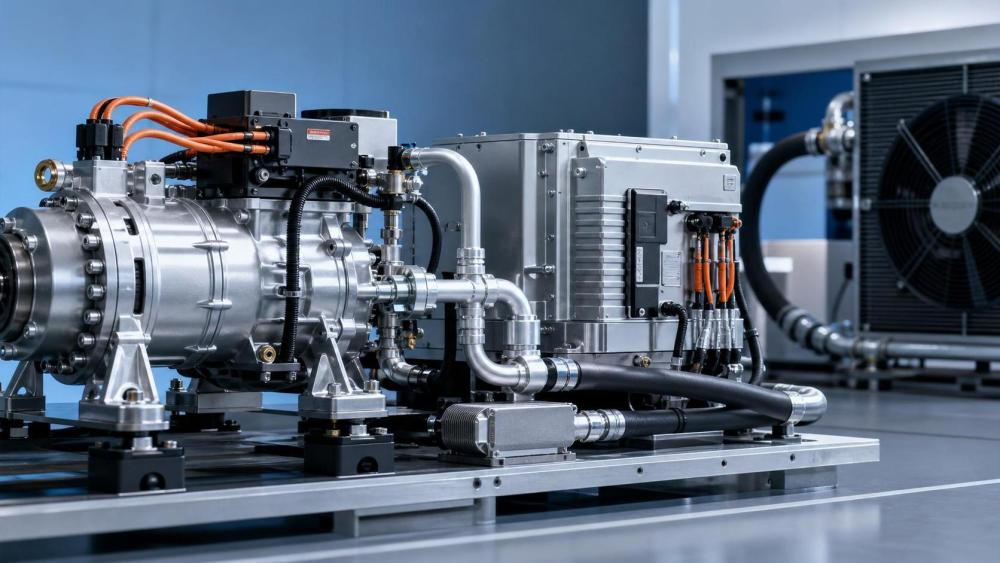
Selecting a Variable Frequency Compressor is rarely a simple efficiency decision. In automotive and thermal systems, the real question is how performance changes across different loads, speeds, and ambient conditions.
That matters because compressors no longer operate in steady, predictable windows. EV thermal loops, heat pump systems, and advanced vehicle HVAC architectures demand wider operating ranges and tighter response.
A good Variable Frequency Compressor can reduce power draw, improve cabin comfort, and support more precise thermal management. A poor match can create noise complaints, control instability, and higher lifecycle cost.
In practical selection work, efficiency, acoustic behavior, and control quality are linked. Improving one area often changes the limits in another.
This is especially relevant for platforms integrating electric compressors, battery liquid cooling, heat pumps, and smart energy strategies. The compressor is no longer an isolated part. It is part of a coordinated system.
Why Variable Frequency Compressor Selection Has Become More Demanding
Traditional fixed-speed thinking does not work well in modern applications. Thermal demand now shifts rapidly with drive cycles, battery state, cabin load, and regional climate.
That creates a wider decision framework for Variable Frequency Compressor selection. Engineers must compare not only rated output, but also modulation quality, inverter coordination, vibration behavior, and low-speed efficiency.
A compressor that looks strong at nominal conditions may underperform in partial-load operation. In many real systems, partial load dominates annual operating hours.
From a business perspective, this changes sourcing priorities. Teams now evaluate how the Variable Frequency Compressor supports vehicle range, comfort targets, and software-driven control strategies.
Efficiency: Look Beyond Peak COP
Peak COP is useful, but it is not enough for smart compressor selection. What matters more is how the Variable Frequency Compressor behaves across the full operating map.
In automotive thermal systems, low and medium loads often drive the real energy profile. A unit optimized only for top-end capacity may consume more energy during long partial-load cycles.
This is why seasonal or mission-profile efficiency is more useful than one headline number. Evaluation should connect compressor speed bands with actual use cases.
- Check efficiency at low, medium, and high speed points.
- Review inverter losses, not just compressor shaft performance.
- Compare performance under heating and cooling modes.
- Map efficiency against ambient extremes and pull-down events.
For EV and heat pump systems, the efficiency trade-off can be sharper. A Variable Frequency Compressor may save energy during moderate conditions, yet struggle when suction pressure, refrigerant behavior, or discharge temperature shifts outside the preferred range.
That also means selection should include defrost, battery conditioning, and cold-start scenarios. These moments often expose the gap between lab performance and field value.
Questions That Improve Efficiency Decisions
- What operating range covers at least 80 percent of real duty time?
- How stable is efficiency when speed changes are frequent?
- Does the Variable Frequency Compressor maintain acceptable oil return at low speed?
- How much energy penalty appears during fast transients?
Noise and Vibration: Often the Hidden Selection Risk
Noise is one of the most underestimated Variable Frequency Compressor selection risks. In quieter EV platforms, even small tonal issues become noticeable.
The problem is not only sound pressure. It also includes frequency character, structure-borne vibration, startup behavior, and resonance with mounts, pipes, or body panels.
A Variable Frequency Compressor may deliver excellent efficiency, yet generate objectionable noise at specific speed bands. This is common when inverter control and mechanical dynamics are not well matched.
More importantly, acoustic quality is not linear. One narrow resonance point can shape the entire user perception of system refinement.
- Measure tonal peaks across the full speed sweep.
- Assess vibration transfer through brackets and hoses.
- Check startup, stop, and rapid ramp transitions.
- Review cabin impact, not only bench NVH results.
In real projects, the best decision is often not the quietest compressor on paper. It is the Variable Frequency Compressor with the most manageable acoustic profile after integration.
That distinction matters. Some issues can be tuned through control software. Others require expensive hardware changes late in development.
Control Precision: The Link Between Hardware and System Value
Control performance is where Variable Frequency Compressor selection becomes a system decision. Speed modulation is valuable only when the compressor responds smoothly and predictably.
A compressor with slow response, unstable low-speed behavior, or narrow control windows can reduce the benefits of advanced thermal management software.
This is especially visible in multi-loop architectures. Battery cooling, cabin comfort, power electronics, and heat pump demands may compete at the same time.
The Variable Frequency Compressor must handle frequent load shifts without hunting, overshoot, or unstable evaporator control.
Key Control Evaluation Points
- Minimum stable speed under weak load conditions.
- Response time to step changes in thermal demand.
- Compatibility with inverter and vehicle control logic.
- Protection strategy during pressure or temperature spikes.
- Communication reliability within the broader thermal controller.
In recent projects, a stronger signal is the growing value of software compatibility. A Variable Frequency Compressor that supports fine control resolution can improve comfort, energy use, and component protection at the same time.
This also means procurement decisions should include calibration effort. A cheaper compressor may create higher engineering cost if tuning becomes difficult.
Architecture Trade-Offs in Real Applications
Different Variable Frequency Compressor designs behave differently under the same load case. Scroll, swash plate, and electric compressor configurations each bring specific trade-offs.
Scroll solutions often offer smooth compression and good modulation, but integration cost and control requirements may be higher. Some systems gain efficiency, while others face packaging or thermal protection limits.
Electric compressor solutions are increasingly attractive in NEV platforms because they decouple operation from engine speed. Still, the Variable Frequency Compressor choice must account for inverter matching, electrical load, and EMC performance.
In mixed fleets or export programs, regional climate also changes the answer. A design that performs well in mild zones may not be the best option in high-humidity or severe winter conditions.
A Practical Variable Frequency Compressor Evaluation Framework
In actual sourcing work, a structured evaluation process prevents narrow decisions. The goal is to compare the Variable Frequency Compressor as a system enabler, not just a catalog component.
A useful framework includes performance, integration, risk, and total cost. Each layer should reflect application reality rather than generic supplier data.
Recommended Evaluation Steps
- Define the real duty cycle, including seasonal and transient conditions.
- Rank energy, NVH, control, durability, and packaging priorities.
- Request full-map data for the Variable Frequency Compressor, not one-point performance.
- Test integration behavior with the target inverter and control strategy.
- Review failure modes at low speed, high pressure, and rapid cycling.
- Estimate calibration effort and field service implications.
This kind of process improves cross-functional alignment. It helps product, engineering, sourcing, and quality teams discuss the same trade-offs with the same evidence.
In practice, the best Variable Frequency Compressor is often the one that delivers balanced system value with the lowest tuning risk.
Final Decision: Choose for Mission Profile, Not Marketing Claims
The strongest Variable Frequency Compressor selection decisions come from matching the compressor to the real mission profile. That includes load variability, climate exposure, acoustic targets, and software control maturity.
Efficiency still matters, but only in context. Noise still matters, but only after integration. Control still matters, but only when it supports stable system behavior over time.
For teams evaluating compressors in automotive and thermal applications, the smart path is clear. Compare operating maps, validate NVH early, and treat control compatibility as a core selection item.
That approach reduces rework, improves lifecycle performance, and creates a more reliable basis for procurement decisions. When the Variable Frequency Compressor is chosen with system reality in mind, the trade-offs become manageable and the long-term value becomes easier to defend.
Have questions about this sector analysis, or seeking best practices specific to your niche? Drop us a line below and let the senior consultants at GAC assist you.
“We respect your privacy. Your information is strictly confidential.”
Related News
- 00
0000-00
How does a shielded HSD cable reduce interference in vehicles? - 00
0000-00
What drives demand for scroll compressors in the automotive market? - 00
0000-00
Does AEC-Q200 apply to flexible printed circuits? - 00
0000-00
How does production volume affect automotive flexible electronics costs? - 00
0000-00
How much does an in-vehicle infotainment system cost to replace?
Weekly Insights
Stay ahead with our curated technology reports delivered every Monday.
Recommended News
 How does a shielded HSD cable reduce interference in vehicles?Discover how a shielded HSD cable reduces vehicle interference, and learn why connector design, routing, and testing matter for reliable high-speed data links.Author:Time:Nov 17, 2026
 What drives demand for scroll compressors in the automotive market?Explore the scroll compressor for automobile market and discover how EV adoption, heat pumps, efficiency, and supplier capabilities shape demand.Author:Time:Nov 16, 2026
 Does AEC-Q200 apply to flexible printed circuits?Flexible Printed Circuit AEC-Q200 requirements explained: discover which components qualify and how to assess automotive FPC reliability.Author:Time:Nov 15, 2026
 How does production volume affect automotive flexible electronics costs?Explore how production volume affects automotive flexible electronics cost, from tooling and yield to testing. Compare quotes and negotiate smarter.Author:Time:Nov 14, 2026
 How much does an in-vehicle infotainment system cost to replace?Explore in-vehicle infotainment cost, from affordable repairs to factory replacements. Compare options, installation fees, and compatibility before you buy.Author:Time:Nov 13, 2026
 How does condenser efficiency affect heat pump performance?Discover how condenser high efficiency can improve heat pump performance, reduce compressor power, and boost heating COP—plus the trade-offs to watch.Author:Time:Nov 12, 2026
 What does each FAKRA cable color code mean?FAKRA cable color code explained: Explore common connector colors, typical uses and key compatibility checks before choosing a replacement.Author:Time:Nov 11, 2026
 How to compare noise ratings for battery coolant pumpsCompare coolant pump low noise ratings with confidence. Learn how test conditions, hydraulic duty, tonal noise and installation affect your choice.Author:Time:Nov 10, 2026
 How bright should automotive display systems be in sunlight?Automotive Display Systems need more than brightness to stay readable in sunlight. Discover why 1,000 nits is a starting point and how to evaluate glare and heat.Author:Time:Nov 09, 2026
 How heat pumps improve the efficiency of EV thermal systemsEV Thermal Systems use heat pumps to reduce heating energy demand. Explore how they work, where they excel, and what limits efficiency in cold weather.Author:Time:Nov 08, 2026
 Can a smart cockpit platform support multiple displays?Can a smart cockpit platform support multiple displays? Explore key requirements for performance, safety, connectivity, and supplier evaluation.Author:Time:Nov 07, 2026
 How is automotive connector vibration resistance tested?Automotive connector vibration resistance testing reveals hidden contact failures. Explore test profiles, continuity monitoring and pass criteria.Author:Time:Nov 06, 2026
 How heat pumps save energy in automotive cabin climate systemsAutomotive Cabin Climate Systems energy saving starts with smarter heat pump design. Explore real-world efficiency, cold-weather trade-offs, and testing tips.Author:Time:Nov 05, 2026
 Is an EV heat pump worth it for winter driving range?Is a heat pump worth using in a cold-climate EV? Discover how it affects winter range, when it pays off, and what to check before buying.Author:Time:Nov 04, 2026
 When should you use 50-ohm coaxial cable instead of 75-ohm?Coaxial cable 50 ohm or 75 ohm? Learn when to use each, avoid impedance mismatches, and choose the right cable for reliable RF and video performance.Author:Time:Nov 03, 2026
 How to select a high temperature motor harness for an EVChoose the right high temperature motor harness for your EV. Compare thermal limits, current capacity, shielding, routing, and validation evidence.Author:Time:Nov 02, 2026
 How much does electric power steering replacement cost?Electric power steering price typically ranges from $1,000 to $3,000 for major replacements. Discover cost factors, repair options, and tips for comparing quotes.Author:Time:Nov 01, 2026
 How to size an EV A/C compressor for the required cooling capacitySize an EV A/C Compressor with confidence. Explore cooling loads, performance maps and power limits to select the right compressor for your vehicle.Author:Time:Oct 31, 2026
 How to choose the right pitch for an FPC board connectorFPC board connector pitch affects space, assembly and reliability. Learn how to compare options and select the best fit for your design.Author:Time:Oct 30, 2026
 How zonal design affects harness routing in high-voltage EV architecturesExplore high-voltage electrical architecture zonal design and its impact on EV harness routing. Discover key trade-offs in cable length, safety, thermal performance, and service access.Author:Time:Oct 29, 2026
 How tariffs affect costs in global automotive parts supply chainsNavigate tariffs in the global automotive parts trade supply chain. Learn to compare landed costs, manage duty exposure, and uncover smarter sourcing strategies to protect your margins.Author:Time:Oct 28, 2026
 How to assess vendor lock-in in a software-defined vehicle platformAssess Software-Defined Vehicle platform lock-in with practical tests for API portability, data access, update control, and exit costs. Learn how to choose a platform with a proven exit path.Author:Time:Oct 27, 2026
 How ISO 26262 guides functional safety in steer-by-wire systemsExplore steering systems functional safety through ISO 26262. Learn how hazard analysis, fault-tolerant design, and validation build a stronger steer-by-wire safety case.Author:Time:Oct 26, 2026
 How to evaluate a steering angle sensor manufacturer's accuracy claimsEvaluate steering angle sensor manufacturer accuracy claims with practical checks on calibration, latency, and test evidence. Compare suppliers confidently and avoid costly selection mistakes.Author:Time:Oct 25, 2026
 How to diagnose CAN bus faults in a hybrid vehicle control unitDiagnose Hybrid Vehicle Systems control unit CAN bus faults with step-by-step power, wiring, and waveform checks. Find the root cause and avoid unnecessary replacement.Author:Time:Oct 24, 2026
 How does battery cooling pipe diameter affect coolant pressure drop?Battery Cooling Pipe diameter affects coolant pressure drop and pump power. Explore sizing calculations and practical tips to optimize EV battery cooling and compare options with confidence.Author:Time:Oct 23, 2026
 How to assess PPAP readiness of automotive sensor system manufacturersAssess Automotive Sensor Systems manufacturers for PPAP readiness. Learn to verify production evidence, measurement capability, validation, and traceability to reduce sourcing risks.Author:Time:Oct 22, 2026
 What to ask an FPC connector manufacturer about reliability testingChoosing an FPC Connector manufacturer? Learn what to ask about reliability testing, failure limits, and traceable results to reduce design risks and select with confidence.Author:Time:Oct 21, 2026
 How to verify vehicle fitment for an aftermarket AC evaporatorNavigating the evaporator aftermarket? Verify vehicle fitment with VIN data, OE numbers, and physical interface checks. Use this guide to avoid costly mismatches and order confidently.Author:Time:Oct 20, 2026
 How electric compressor speed affects EV battery cooling capacityElectric compressor technology: battery cooling depends on more than RPM. Discover how speed, refrigerant flow, and system limits affect EV cooling capacity and energy efficiency.Author:Time:Oct 19, 2026





























