
How to Evaluate Electric A/C Compressor Options in Europe for EV Thermal Systems




Start with the thermal job, not the compressor catalog
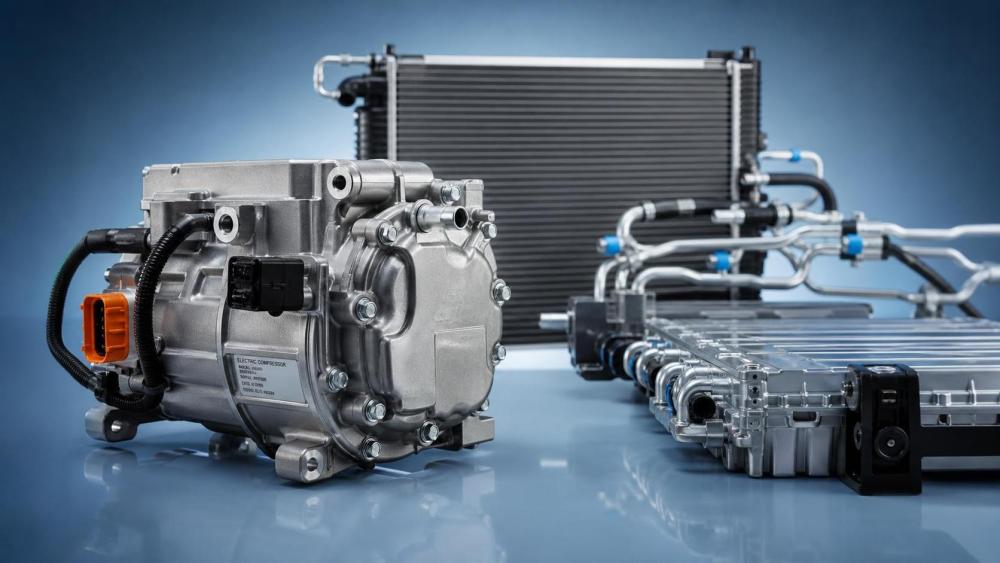
When teams evaluate an electric A/C compressor Europe option for an EV platform, the first mistake is usually the same: they compare compressor ratings before they have defined the thermal duty clearly enough. That creates noise early and redesign cost later.
Begin with the operating map your vehicle actually has to survive. Cabin cooling is only one part of the load. In an EV thermal system, the compressor may also support battery temperature control, power electronics cooling, heat pump operation, windshield defogging, and pull-down performance after hot soak. A unit that looks acceptable in a light-duty cooling scenario can become the weak point when the vehicle has fast-charging thermal constraints or aggressive winter heat pump use.
Write down the use cases before shortlisting suppliers: ambient range, target pull-down time, battery thermal limits, NVH targets, voltage architecture, refrigerant, packaging envelope, and expected control strategy. Without that, “fit” is mostly guesswork.
Check the load cases that actually kill bad selections
A serious evaluation is less about peak brochure numbers and more about where performance starts falling apart. Focus on the conditions that expose compressor limits:
- High ambient cabin pull-down with solar load.
- Battery cooling during DC fast charging.
- Low-temperature heat pump operation where discharge temperature, lubrication, and capacity stability matter.
- Urban stop-and-go conditions where transient response matters more than steady-state curves.
- Part-load cruising, because efficiency losses here affect real vehicle energy consumption more than brief peak events.
If the supplier data only shows one nominal rating point, that is not enough for selection. Ask for performance maps across speed, suction and discharge conditions, and operating temperature ranges relevant to your system architecture.
Voltage compatibility is more than matching a headline number
European EV programs now span different electrical architectures, and the compressor has to live comfortably inside that reality. A nominal high-voltage match is only the start. Evaluate the acceptable input voltage range, behavior during transients, startup characteristics, insulation design, high-voltage connector interface, and interaction with the inverter and vehicle control system.
This is where good-looking options often slip. A compressor may support the target bus voltage on paper but become awkward once you account for derating, EMC behavior, wiring layout, or fault handling strategy. Technical evaluators should check the electrical interface documents, fault code definitions, shutdown logic, and communication method early. Waiting until system integration is late and expensive.
Do not treat refrigerant compatibility as a box-tick
In Europe, refrigerant choice affects compressor suitability in very practical ways: oil compatibility, sealing materials, control calibration, safety design, service considerations, and system architecture. If your team is comparing compressors intended for different refrigerant families, stop and normalize the basis of comparison first.
The useful question is not “Can it run?” but “Can it run efficiently, repeatedly, and within the system’s protection margins?” Ask for the approved refrigerant and lubricant pairing, operating envelope, and any restrictions tied to speed range or ambient conditions. A mismatch here can show up later as durability drift, efficiency loss, or unstable control behavior rather than immediate failure, which makes it easy to miss during rushed sourcing rounds.
Compare efficiency where the vehicle spends time
A compressor with a strong peak figure is not automatically the best choice for an EV thermal system. For range-sensitive platforms, part-load efficiency and control smoothness matter more than isolated peak capacity. Review map data with the actual vehicle duty cycle in mind.
A practical screening approach is to separate three questions:
- Does the compressor cover the extreme thermal loads without forcing the rest of the system into a compromise?
- How efficient is it in the middle of the map, where daily driving usually sits?
- How stable is its response under rapid control changes?
If one candidate needs higher speed more often to deliver the same system outcome, that usually shows up in energy use, acoustic performance, and long-term stress. The datasheet may not make that obvious. The operating map usually does.
NVH deserves early attention, especially for Europe-bound EVs
Once the combustion engine is gone, compressor noise becomes easier to notice. That matters even more in premium segments and quiet urban driving cycles common in Europe. Technical evaluation should look beyond “noise level” as a single value.
Check what the supplier is actually measuring: airborne noise, structure-borne vibration, test condition, mounting state, speed point, and whether the data reflects isolated compressor testing or installed system behavior. A compressor that is acceptable on a bench can become intrusive after it couples with brackets, refrigerant lines, or a specific front-end module layout.
Common oversight: teams compare peak SPL values and ignore tonal behavior. Drivers usually complain about tonal whine and vibration feel, not just total level.
Packaging and mounting constraints eliminate many candidates quickly
This part sounds basic, but it saves time. Before deeper technical scoring, confirm hard-fit items: envelope dimensions, mounting points, service clearance, connector orientation, line routing, mass, and cooling needs of the compressor electronics if integrated.
European vehicle programs often have tight packaging because the compressor is competing with battery structures, crash members, heat pump components, and underbody protection. If installation forces awkward hose routing, sharp bends, or difficult service access, the “better” compressor may create worse system behavior overall.
Interface and controls can turn a viable unit into a difficult program
Selection is not only mechanical and thermodynamic. Evaluate how the compressor talks to the rest of the vehicle. That includes communication protocol, command structure, diagnostic feedback, fault prioritization, fail-safe behavior, speed control resolution, and response time.
Ask for the control specification, not just a summary slide. You want to know how much calibration effort the unit will demand. Some compressors integrate cleanly with the vehicle thermal controller; others require workaround logic that increases software effort and validation time. Engineers usually feel this pain long after sourcing thinks the selection is finished.
Look at durability through the use case, not through generic life claims
Life expectancy statements are only useful when the duty assumptions are visible. For EV thermal systems, compressor stress depends heavily on cycling pattern, ambient range, charging behavior, heat pump usage, contamination control, and oil return stability. A durability claim with no context has limited decision value.
Review what endurance evidence the supplier can provide for the application class closest to yours. Pay attention to start-stop frequency, extreme ambient exposure, vibration environment, and operation near the edges of the envelope. Also ask how failure modes are detected. A unit that degrades gradually without clear diagnostic visibility can become a field problem before it becomes a warranty code.
Use a short decision table before lab work expands
Supplier capability matters as much as the hardware
For Europe-focused sourcing, technical evaluation should include the supplier’s ability to support documentation, engineering communication, traceability, and change management. This is especially important when the compressor is part of a wider EV thermal system with tight validation timing.
Look at the quality of the data package. Are performance maps complete? Are interface definitions consistent? Is there a clear revision history? Can the supplier explain application limits without hand-waving? Weak documentation is often an early signal that later validation rounds will be slower and noisier than planned.
For cross-border programs, also review how quickly technical questions are answered and whether sample builds, PPAP-style deliverables, or equivalent production-readiness documents can be supported in the format your organization uses.
Do a compliance file review at the same time as technical screening
Do not leave regulatory and documentation review until after performance testing. For compressor options entering European vehicle programs, the practical step is to request the compliance-related file set alongside the technical proposal and review both together. The exact documents depend on product configuration and the role of the part in the vehicle, but the evaluation team should at least confirm which declarations, material-related records, labeling details, and technical construction information are available from the supplier.
The reason is simple: a technically strong unit that arrives with incomplete documentation creates the same launch delay as a weak unit. Engineers often inherit this problem late because nobody checked the file package while the shortlist was still small.
A workable evaluation sequence
A clean process usually moves faster than a larger one. In practice, the sequence below keeps most teams out of trouble:
- Define the vehicle thermal duty and electrical architecture.
- Remove candidates that fail refrigerant, packaging, or interface basics.
- Compare performance maps using real operating points, not catalog peaks.
- Review NVH and control behavior before committing to deeper validation.
- Check supplier documentation quality and production support readiness.
- Only then spend heavily on system-level testing.
That order sounds strict, but it prevents a common failure mode in electric A/C compressor Europe projects: too much time spent proving a compressor can work, and not enough time asking whether it is the right fit for the EV thermal system you are actually building.
Have questions about this sector analysis, or seeking best practices specific to your niche? Drop us a line below and let the senior consultants at GAC assist you.
“We respect your privacy. Your information is strictly confidential.”
Related News
- 00
0000-00
How to compare noise ratings for battery coolant pumps - 00
0000-00
How bright should automotive display systems be in sunlight? - 00
0000-00
How heat pumps improve the efficiency of EV thermal systems - 00
0000-00
Can a smart cockpit platform support multiple displays? - 00
0000-00
How is automotive connector vibration resistance tested?
Weekly Insights
Stay ahead with our curated technology reports delivered every Monday.
Recommended News
 How to compare noise ratings for battery coolant pumpsCompare coolant pump low noise ratings with confidence. Learn how test conditions, hydraulic duty, tonal noise and installation affect your choice.Author:Time:Nov 10, 2026
 How bright should automotive display systems be in sunlight?Automotive Display Systems need more than brightness to stay readable in sunlight. Discover why 1,000 nits is a starting point and how to evaluate glare and heat.Author:Time:Nov 09, 2026
 How heat pumps improve the efficiency of EV thermal systemsEV Thermal Systems use heat pumps to reduce heating energy demand. Explore how they work, where they excel, and what limits efficiency in cold weather.Author:Time:Nov 08, 2026
 Can a smart cockpit platform support multiple displays?Can a smart cockpit platform support multiple displays? Explore key requirements for performance, safety, connectivity, and supplier evaluation.Author:Time:Nov 07, 2026
 How is automotive connector vibration resistance tested?Automotive connector vibration resistance testing reveals hidden contact failures. Explore test profiles, continuity monitoring and pass criteria.Author:Time:Nov 06, 2026
 How heat pumps save energy in automotive cabin climate systemsAutomotive Cabin Climate Systems energy saving starts with smarter heat pump design. Explore real-world efficiency, cold-weather trade-offs, and testing tips.Author:Time:Nov 05, 2026
 Is an EV heat pump worth it for winter driving range?Is a heat pump worth using in a cold-climate EV? Discover how it affects winter range, when it pays off, and what to check before buying.Author:Time:Nov 04, 2026
 When should you use 50-ohm coaxial cable instead of 75-ohm?Coaxial cable 50 ohm or 75 ohm? Learn when to use each, avoid impedance mismatches, and choose the right cable for reliable RF and video performance.Author:Time:Nov 03, 2026
 How to select a high temperature motor harness for an EVChoose the right high temperature motor harness for your EV. Compare thermal limits, current capacity, shielding, routing, and validation evidence.Author:Time:Nov 02, 2026
 How much does electric power steering replacement cost?Electric power steering price typically ranges from $1,000 to $3,000 for major replacements. Discover cost factors, repair options, and tips for comparing quotes.Author:Time:Nov 01, 2026
 How to size an EV A/C compressor for the required cooling capacitySize an EV A/C Compressor with confidence. Explore cooling loads, performance maps and power limits to select the right compressor for your vehicle.Author:Time:Oct 31, 2026
 How to choose the right pitch for an FPC board connectorFPC board connector pitch affects space, assembly and reliability. Learn how to compare options and select the best fit for your design.Author:Time:Oct 30, 2026
 How zonal design affects harness routing in high-voltage EV architecturesExplore high-voltage electrical architecture zonal design and its impact on EV harness routing. Discover key trade-offs in cable length, safety, thermal performance, and service access.Author:Time:Oct 29, 2026
 How tariffs affect costs in global automotive parts supply chainsNavigate tariffs in the global automotive parts trade supply chain. Learn to compare landed costs, manage duty exposure, and uncover smarter sourcing strategies to protect your margins.Author:Time:Oct 28, 2026
 How to assess vendor lock-in in a software-defined vehicle platformAssess Software-Defined Vehicle platform lock-in with practical tests for API portability, data access, update control, and exit costs. Learn how to choose a platform with a proven exit path.Author:Time:Oct 27, 2026
 How ISO 26262 guides functional safety in steer-by-wire systemsExplore steering systems functional safety through ISO 26262. Learn how hazard analysis, fault-tolerant design, and validation build a stronger steer-by-wire safety case.Author:Time:Oct 26, 2026
 How to evaluate a steering angle sensor manufacturer's accuracy claimsEvaluate steering angle sensor manufacturer accuracy claims with practical checks on calibration, latency, and test evidence. Compare suppliers confidently and avoid costly selection mistakes.Author:Time:Oct 25, 2026
 How to diagnose CAN bus faults in a hybrid vehicle control unitDiagnose Hybrid Vehicle Systems control unit CAN bus faults with step-by-step power, wiring, and waveform checks. Find the root cause and avoid unnecessary replacement.Author:Time:Oct 24, 2026
 How does battery cooling pipe diameter affect coolant pressure drop?Battery Cooling Pipe diameter affects coolant pressure drop and pump power. Explore sizing calculations and practical tips to optimize EV battery cooling and compare options with confidence.Author:Time:Oct 23, 2026
 How to assess PPAP readiness of automotive sensor system manufacturersAssess Automotive Sensor Systems manufacturers for PPAP readiness. Learn to verify production evidence, measurement capability, validation, and traceability to reduce sourcing risks.Author:Time:Oct 22, 2026
 What to ask an FPC connector manufacturer about reliability testingChoosing an FPC Connector manufacturer? Learn what to ask about reliability testing, failure limits, and traceable results to reduce design risks and select with confidence.Author:Time:Oct 21, 2026
 How to verify vehicle fitment for an aftermarket AC evaporatorNavigating the evaporator aftermarket? Verify vehicle fitment with VIN data, OE numbers, and physical interface checks. Use this guide to avoid costly mismatches and order confidently.Author:Time:Oct 20, 2026
 How electric compressor speed affects EV battery cooling capacityElectric compressor technology: battery cooling depends on more than RPM. Discover how speed, refrigerant flow, and system limits affect EV cooling capacity and energy efficiency.Author:Time:Oct 19, 2026
 How to verify a variable frequency compressor supplier’s efficiency claimsVerify a variable frequency compressor supplier’s efficiency claims using COP boundaries, matched test conditions, and duty-cycle data. Learn how to choose with confidence.Author:Time:Oct 18, 2026
 How bend radius affects FPC reliability in automotive camera modulesAutomotive FPC applications: camera module reliability starts with bend radius. Learn how stack-up, strain, and validation guide robust designs and help prevent costly failures.Author:Time:Oct 17, 2026
 How to diagnose intermittent loss of electric power steering assistMaster power steering system diagnostics to trace intermittent EPS assist loss. Learn proven checks for voltage, wiring, and fault codes to avoid costly guesswork.Author:Time:Oct 16, 2026
 How to size automotive power modules for electric compressorsSize automotive power modules for electric compressors with confidence. Learn how voltage, phase current, losses, and cooling shape reliable selection—and avoid costly oversizing.Author:Time:Oct 15, 2026
 Why automotive power electronics are shifting to silicon carbideAutomotive Power Electronics are shifting to silicon carbide. Discover how SiC can cut losses, boost EV power density, and reshape cooling, reliability, and system costs.Author:Time:Oct 14, 2026
 How EV adoption shapes the electrically driven compressor marketExplore how EV adoption shapes the electrically driven compressor market, from battery cooling and heat pumps to supplier margins. Discover the drivers of profitable growth.Author:Time:Oct 13, 2026
 How to size a PTC heater for reliable EV cabin heatingPTC Heater sizing for EV cabins: learn how to balance defrost performance, heat-pump integration, airflow, voltage range, and battery power for reliable winter comfort.Author:Time:Oct 12, 2026





























