
High-Voltage Flat-Wire Motors: Key Reliability Risks to Check




As vehicle platforms move toward higher voltage and denser e-drive integration, high-voltage flat-wire motors are becoming critical points for quality and safety control. Their compact windings, improved slot fill, and thermal advantages also introduce hidden reliability risks—from insulation stress and partial discharge to cooling imbalance and manufacturing defects. For quality control and safety managers, understanding these failure modes early is essential to prevent field failures, warranty exposure, and safety incidents across the NEV value chain.
Why High-Voltage Flat-Wire Motors Require a Different Reliability Mindset
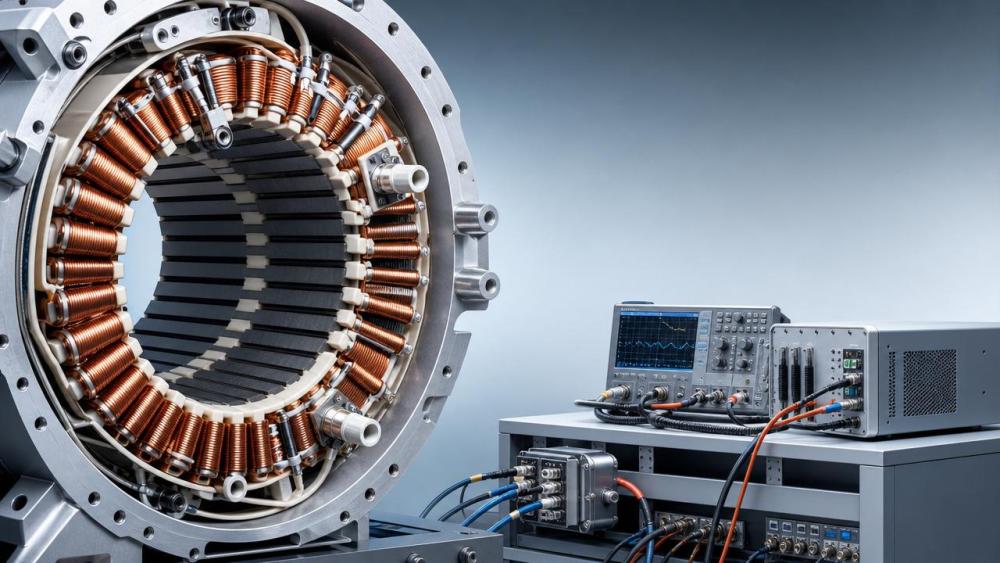
High-voltage flat-wire motors are not simply round-wire motors with a new conductor shape. The rectangular copper or aluminum wire changes slot fill, heat paths, bending stress, and insulation interfaces.
For quality control teams, the main challenge is that efficiency gains often hide smaller safety margins. Higher voltage, faster switching, and compact hairpin layouts can accelerate weak insulation points.
Safety managers also need to view the motor as part of a system. Inverter PWM behavior, high-voltage harness routing, coolant stability, and thermal management logic all influence motor life.
Key differences that affect inspection priorities
- Flat conductors increase slot fill but create tight bend radii, making coating cracks and corner insulation stress more likely during forming.
- Hairpin welding improves automation potential, yet weld voids, spatter, and inconsistent fusion may raise resistance or trigger localized heating.
- Higher DC bus voltage increases electric field intensity, so partial discharge inception voltage becomes a practical safety indicator.
- Compact stator designs depend heavily on stable cooling, because small coolant flow deviations can create repeated thermal cycling.
Which Reliability Risks Should Quality Teams Check First?
The most useful inspection approach starts with failure consequences. A cosmetic defect, a process drift, and a safety-critical insulation weakness should not receive the same priority.
For high-voltage flat-wire motors, quality teams should build a risk matrix around electrical, thermal, mechanical, and process-related factors. The table below supports early screening.
This matrix is not a replacement for product-specific DFMEA or PFMEA. It helps teams identify where high-voltage flat-wire motors differ from legacy e-motor platforms.
Insulation and Partial Discharge: The Hidden Safety Boundary
In high-voltage flat-wire motors, insulation reliability is often the first boundary between normal operation and a safety event. Small voids can become serious under repetitive voltage pulses.
Partial discharge is especially important in 800 V-class platforms and fast-switching inverter systems. Even when a motor passes basic withstand tests, repetitive PD can degrade organic insulation over time.
Inspection points for insulation risk
- Check conductor enamel integrity after bending, insertion, twisting, and welding, not only before forming.
- Validate phase-to-phase and turn-to-turn insulation under representative temperature and humidity conditions.
- Compare surge waveform consistency across stators to detect weak coils, inter-turn shorts, or process drift.
- Assess creepage and clearance around terminals, busbars, welded ends, and high-voltage connection interfaces.
GACT’s intelligence focus on auto wiring harnesses and electromechanical controls is relevant here. Motor insulation cannot be isolated from connector design, inverter output, and high-voltage routing.
Thermal Management Risks: When Compact Design Becomes a Liability
Flat-wire windings generally support better copper packing and heat transfer. However, the same compact structure can reduce tolerance for coolant variation, blocked channels, or algorithmic mistakes.
For safety managers, the key question is not whether the motor can achieve peak power. The question is whether it can manage heat repeatedly across real vehicle duty cycles.
Cooling scenarios that deserve validation
- Low-speed high-torque operation, where copper loss rises while vehicle airflow may be limited.
- Fast charging departure, where battery thermal demand and e-drive cooling may compete for system capacity.
- Cold-start acceleration, where coolant viscosity, pump response, and inverter protection logic may behave differently.
- Mountain driving or towing, where thermal saturation can expose weak temperature sensor placement.
GACT observes NEV thermal management systems as “temperature control hubs.” This perspective helps teams connect motor reliability with heat pumps, multi-way valves, electric compressors, and coolant loops.
Manufacturing Defects That Are Easy to Miss During Ramp-Up
Many failures in high-voltage flat-wire motors originate before final assembly. Forming pressure, hairpin alignment, welding energy, and resin impregnation quality can vary during production acceleration.
A strong launch control plan should include both in-line process monitoring and destructive sampling. Relying only on final electrical tests may allow latent defects to escape.
Process parameters to track before approval
The following table highlights practical control points for procurement audits, supplier quality assessments, and production readiness reviews.
The table also supports commercial decisions. A supplier that cannot show stable process evidence may create hidden warranty cost even if its initial quotation appears attractive.
Procurement Checklist for High-Voltage Flat-Wire Motors
Procurement decisions for high-voltage flat-wire motors should combine price, manufacturability, safety evidence, and system compatibility. Unit cost alone is a weak indicator of lifetime value.
Quality and safety managers should request documentation that connects design limits with production control. The goal is to identify suppliers that can sustain performance under volume pressure.
Supplier evaluation dimensions
- Confirm whether insulation validation covers voltage rise time, repetitive pulses, humidity exposure, and thermal aging.
- Review how the supplier correlates motor temperature sensors with actual winding hot spots during load cycles.
- Ask for traceability from conductor batch, slot liner material, weld data, impregnation batch, and end-of-line test results.
- Check whether corrective action processes include containment, root cause analysis, revalidation, and recurrence prevention.
- Evaluate compatibility with high-voltage harnesses, inverter interfaces, thermal modules, and vehicle-level diagnostics.
This approach reduces procurement uncertainty. It also helps safety teams defend approval decisions when schedules are tight and launch timing is under pressure.
Compliance and Test Standards: What Should Be Referenced?
No single standard fully covers every reliability risk in high-voltage flat-wire motors. Teams usually combine automotive quality systems, electrical safety requirements, environmental tests, and internal validation rules.
Common references may include IATF 16949 for automotive quality management, ISO 26262 for functional safety considerations, ISO 6469 for electric road vehicle safety, and IEC insulation test principles.
Practical compliance mapping
For sourcing and audit meetings, a simple compliance map can clarify which evidence belongs to which risk area.
A compliance map makes audits more focused. It prevents teams from accepting large document packages that do not answer the most important reliability questions.
Common Misjudgments in Reliability Reviews
High-voltage flat-wire motors are sometimes approved based on efficiency curves and packaging benefits. That is risky when validation coverage, process maturity, and system interaction are unclear.
Misjudgment 1: Passing hi-pot means insulation is safe
Hi-pot testing is important, but it may not reveal repetitive pulse aging, void-related partial discharge, or marginal turn-to-turn defects under dynamic inverter conditions.
Misjudgment 2: Thermal simulation is enough
Simulation supports design, but real vehicle duty cycles can expose sensor delay, coolant distribution issues, and shared-loop conflicts with battery or cabin thermal loads.
Misjudgment 3: A low quotation reduces project risk
A lower quotation may reflect immature automation, limited sampling, or weaker traceability. Warranty claims and recall containment can quickly exceed early procurement savings.
FAQ for Quality Control and Safety Managers
How do I choose a supplier for high-voltage flat-wire motors?
Start with insulation validation, process capability, weld control, thermal test coverage, and traceability. Then compare pricing only after technical and safety gaps are visible.
Are high-voltage flat-wire motors suitable for all NEV platforms?
They are suitable for many compact, high-efficiency e-drive systems. However, platform voltage, cooling architecture, inverter switching strategy, and service environment must be matched carefully.
What test data should be requested before production approval?
Request DV/PV reports, surge and hi-pot results, PD assessment where applicable, weld resistance trends, temperature mapping, vibration tests, cleanliness data, and failure analysis records.
What is the most overlooked reliability risk?
System interaction is often overlooked. A motor may pass standalone tests but fail earlier when combined with a specific inverter, coolant loop, harness layout, or control strategy.
Why Choose GACT for Reliability Intelligence and Decision Support
GACT connects automotive electromechanical controls, high-voltage harnesses, smart cabin electronics, and NEV thermal management systems through practical intelligence stitching. This system view is essential for high-voltage flat-wire motors.
Our Strategic Intelligence Center follows component trends, access standards, copper and aluminum price movement, cooling logic, and supplier competitiveness. The focus is not news volume, but decision usefulness.
Consult us when you need to clarify
- Parameter confirmation for voltage class, insulation margin, thermal limits, cooling method, and expected duty cycle.
- Supplier comparison for high-voltage flat-wire motors, including quality evidence, process maturity, and launch risk.
- Certification and compliance questions involving automotive quality systems, electric safety references, and validation documents.
- Customized research on e-drive cooling, high-voltage harness interaction, electric compressor load, and integrated thermal modules.
- Quotation communication, sample support planning, delivery cycle assessment, and technical shortlist preparation.
For quality control and safety managers, early intelligence reduces late-stage surprises. Contact GACT to discuss high-voltage flat-wire motors, validation priorities, supplier risks, and NEV system integration decisions.
Have questions about this sector analysis, or seeking best practices specific to your niche? Drop us a line below and let the senior consultants at GAC assist you.
“We respect your privacy. Your information is strictly confidential.”
Related News
- 00
0000-00
What does each FAKRA cable color code mean? - 00
0000-00
How to compare noise ratings for battery coolant pumps - 00
0000-00
How bright should automotive display systems be in sunlight? - 00
0000-00
How heat pumps improve the efficiency of EV thermal systems - 00
0000-00
Can a smart cockpit platform support multiple displays?
Weekly Insights
Stay ahead with our curated technology reports delivered every Monday.
Recommended News
 What does each FAKRA cable color code mean?FAKRA cable color code explained: Explore common connector colors, typical uses and key compatibility checks before choosing a replacement.Author:Time:Nov 11, 2026
 How to compare noise ratings for battery coolant pumpsCompare coolant pump low noise ratings with confidence. Learn how test conditions, hydraulic duty, tonal noise and installation affect your choice.Author:Time:Nov 10, 2026
 How bright should automotive display systems be in sunlight?Automotive Display Systems need more than brightness to stay readable in sunlight. Discover why 1,000 nits is a starting point and how to evaluate glare and heat.Author:Time:Nov 09, 2026
 How heat pumps improve the efficiency of EV thermal systemsEV Thermal Systems use heat pumps to reduce heating energy demand. Explore how they work, where they excel, and what limits efficiency in cold weather.Author:Time:Nov 08, 2026
 Can a smart cockpit platform support multiple displays?Can a smart cockpit platform support multiple displays? Explore key requirements for performance, safety, connectivity, and supplier evaluation.Author:Time:Nov 07, 2026
 How is automotive connector vibration resistance tested?Automotive connector vibration resistance testing reveals hidden contact failures. Explore test profiles, continuity monitoring and pass criteria.Author:Time:Nov 06, 2026
 How heat pumps save energy in automotive cabin climate systemsAutomotive Cabin Climate Systems energy saving starts with smarter heat pump design. Explore real-world efficiency, cold-weather trade-offs, and testing tips.Author:Time:Nov 05, 2026
 Is an EV heat pump worth it for winter driving range?Is a heat pump worth using in a cold-climate EV? Discover how it affects winter range, when it pays off, and what to check before buying.Author:Time:Nov 04, 2026
 When should you use 50-ohm coaxial cable instead of 75-ohm?Coaxial cable 50 ohm or 75 ohm? Learn when to use each, avoid impedance mismatches, and choose the right cable for reliable RF and video performance.Author:Time:Nov 03, 2026
 How to select a high temperature motor harness for an EVChoose the right high temperature motor harness for your EV. Compare thermal limits, current capacity, shielding, routing, and validation evidence.Author:Time:Nov 02, 2026
 How much does electric power steering replacement cost?Electric power steering price typically ranges from $1,000 to $3,000 for major replacements. Discover cost factors, repair options, and tips for comparing quotes.Author:Time:Nov 01, 2026
 How to size an EV A/C compressor for the required cooling capacitySize an EV A/C Compressor with confidence. Explore cooling loads, performance maps and power limits to select the right compressor for your vehicle.Author:Time:Oct 31, 2026
 How to choose the right pitch for an FPC board connectorFPC board connector pitch affects space, assembly and reliability. Learn how to compare options and select the best fit for your design.Author:Time:Oct 30, 2026
 How zonal design affects harness routing in high-voltage EV architecturesExplore high-voltage electrical architecture zonal design and its impact on EV harness routing. Discover key trade-offs in cable length, safety, thermal performance, and service access.Author:Time:Oct 29, 2026
 How tariffs affect costs in global automotive parts supply chainsNavigate tariffs in the global automotive parts trade supply chain. Learn to compare landed costs, manage duty exposure, and uncover smarter sourcing strategies to protect your margins.Author:Time:Oct 28, 2026
 How to assess vendor lock-in in a software-defined vehicle platformAssess Software-Defined Vehicle platform lock-in with practical tests for API portability, data access, update control, and exit costs. Learn how to choose a platform with a proven exit path.Author:Time:Oct 27, 2026
 How ISO 26262 guides functional safety in steer-by-wire systemsExplore steering systems functional safety through ISO 26262. Learn how hazard analysis, fault-tolerant design, and validation build a stronger steer-by-wire safety case.Author:Time:Oct 26, 2026
 How to evaluate a steering angle sensor manufacturer's accuracy claimsEvaluate steering angle sensor manufacturer accuracy claims with practical checks on calibration, latency, and test evidence. Compare suppliers confidently and avoid costly selection mistakes.Author:Time:Oct 25, 2026
 How to diagnose CAN bus faults in a hybrid vehicle control unitDiagnose Hybrid Vehicle Systems control unit CAN bus faults with step-by-step power, wiring, and waveform checks. Find the root cause and avoid unnecessary replacement.Author:Time:Oct 24, 2026
 How does battery cooling pipe diameter affect coolant pressure drop?Battery Cooling Pipe diameter affects coolant pressure drop and pump power. Explore sizing calculations and practical tips to optimize EV battery cooling and compare options with confidence.Author:Time:Oct 23, 2026
 How to assess PPAP readiness of automotive sensor system manufacturersAssess Automotive Sensor Systems manufacturers for PPAP readiness. Learn to verify production evidence, measurement capability, validation, and traceability to reduce sourcing risks.Author:Time:Oct 22, 2026
 What to ask an FPC connector manufacturer about reliability testingChoosing an FPC Connector manufacturer? Learn what to ask about reliability testing, failure limits, and traceable results to reduce design risks and select with confidence.Author:Time:Oct 21, 2026
 How to verify vehicle fitment for an aftermarket AC evaporatorNavigating the evaporator aftermarket? Verify vehicle fitment with VIN data, OE numbers, and physical interface checks. Use this guide to avoid costly mismatches and order confidently.Author:Time:Oct 20, 2026
 How electric compressor speed affects EV battery cooling capacityElectric compressor technology: battery cooling depends on more than RPM. Discover how speed, refrigerant flow, and system limits affect EV cooling capacity and energy efficiency.Author:Time:Oct 19, 2026
 How to verify a variable frequency compressor supplier’s efficiency claimsVerify a variable frequency compressor supplier’s efficiency claims using COP boundaries, matched test conditions, and duty-cycle data. Learn how to choose with confidence.Author:Time:Oct 18, 2026
 How bend radius affects FPC reliability in automotive camera modulesAutomotive FPC applications: camera module reliability starts with bend radius. Learn how stack-up, strain, and validation guide robust designs and help prevent costly failures.Author:Time:Oct 17, 2026
 How to diagnose intermittent loss of electric power steering assistMaster power steering system diagnostics to trace intermittent EPS assist loss. Learn proven checks for voltage, wiring, and fault codes to avoid costly guesswork.Author:Time:Oct 16, 2026
 How to size automotive power modules for electric compressorsSize automotive power modules for electric compressors with confidence. Learn how voltage, phase current, losses, and cooling shape reliable selection—and avoid costly oversizing.Author:Time:Oct 15, 2026
 Why automotive power electronics are shifting to silicon carbideAutomotive Power Electronics are shifting to silicon carbide. Discover how SiC can cut losses, boost EV power density, and reshape cooling, reliability, and system costs.Author:Time:Oct 14, 2026
 How EV adoption shapes the electrically driven compressor marketExplore how EV adoption shapes the electrically driven compressor market, from battery cooling and heat pumps to supplier margins. Discover the drivers of profitable growth.Author:Time:Oct 13, 2026





























