Car AC Compressor Supplier Checklist: Cost, Lead Time, and Quality




Why does the choice of a car AC compressor supplier matter so much?
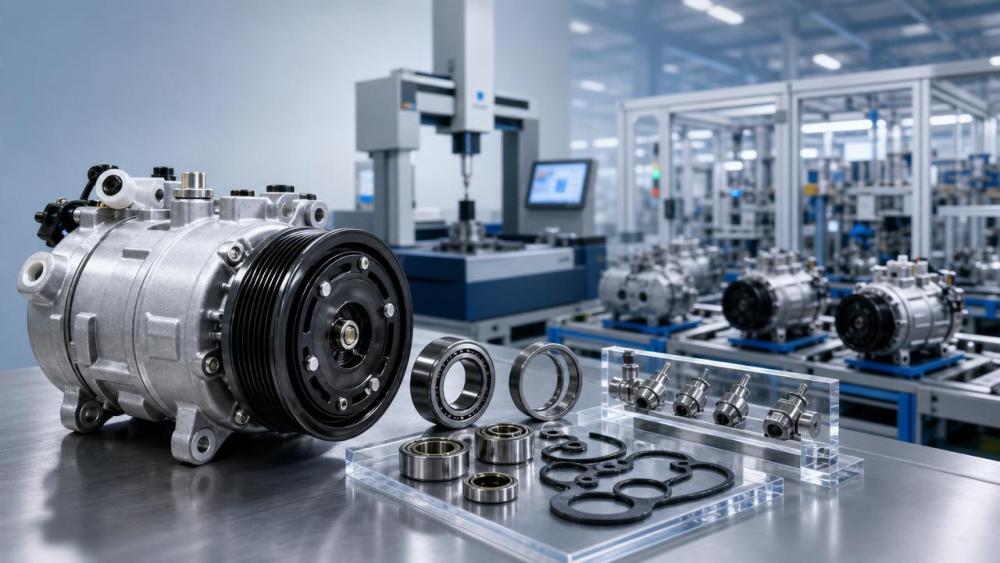
A car AC compressor supplier affects more than unit price. The right source shapes warranty risk, line continuity, and even vehicle comfort performance.
In practical sourcing, compressor failure is rarely a small issue. It can trigger system contamination, refrigerant leakage, noise complaints, and costly field replacement.
That is why supplier selection should start with total procurement impact, not just quoted cost. A lower price can become expensive after logistics delays or unstable quality.
This is especially true as thermal systems become more complex. Conventional passenger cars, hybrid platforms, and electrified vehicles all place different demands on compressor performance.
Across global markets, the stronger car AC compressor supplier is usually the one that can explain application fit, testing scope, and delivery discipline with evidence.
Industry portals such as GACT are useful here because sourcing decisions no longer sit in isolation. Compressors connect with broader thermal management, electrification, and supply chain trends.
When comparing quotes, what should be included beyond the piece price?
A quote from a car AC compressor supplier should be treated as a cost structure, not a single number. The cheapest line item may hide the most expensive conditions.
A more reliable comparison usually includes tooling, packaging, testing charges, sample fees, warranty terms, and shipping assumptions. Without these, quote analysis stays incomplete.
It also helps to separate program stage costs. Prototype pricing, pilot build pricing, and mass production pricing can differ significantly.
For export business, exchange rate exposure and destination compliance costs also matter. A supplier serving several regions often prices differently based on documentation and validation burden.
The checklist below makes quote comparison easier and reduces the risk of approving an incomplete offer.
If two suppliers look similar on price, the one with clearer assumptions is often the safer choice. Transparency is part of cost control.
How can lead time be checked before it turns into a delivery problem?
Lead time should never be judged by a single promise in a quotation. A dependable car AC compressor supplier can explain how that timing is achieved.
The first point is capacity logic. Ask whether machining, assembly, balancing, and final testing are done in-house or through critical subcontractors.
The second point is material exposure. Compressor supply depends on castings, shafts, seals, bearings, clutch parts, and electronics in some product types.
A lead time that looks short on paper may actually rely on unstable component arrivals. That becomes visible only when the supplier maps its upstream chain clearly.
More mature suppliers usually give three timelines, not one. They separate sample lead time, normal production lead time, and expedited replenishment lead time.
It is also worth asking about on-time delivery performance for the last six to twelve months. Historical consistency says more than a verbal commitment.
- Confirm standard production cycle and peak season cycle.
- Check whether safety stock is available for common models.
- Ask how engineering changes affect confirmed schedules.
- Review shipment recovery plans after disruption.
For programs involving multiple thermal components, lead time discipline becomes even more important. Compressor delays can disrupt condenser, valve, and hose system planning.
What proves quality in a car AC compressor supplier, beyond certifications?
Certifications matter, but they are not the whole answer. A car AC compressor supplier should show process control and product validation that fit the intended vehicle application.
Start with the basics, such as IATF 16949, ISO 9001, and traceability discipline. Then move quickly to evidence from real compressor testing.
Useful validation records often include endurance tests, refrigerant compatibility, pressure resistance, clutch durability, vibration response, and noise measurement.
For electric and hybrid systems, the quality review should also consider insulation, electrical safety, and compatibility with broader thermal management architecture.
This is where broader market intelligence helps. GACT tracks thermal system evolution, so compressor evaluation can be linked with changes in heat pump integration and energy efficiency demands.
A supplier with strong quality control usually speaks in measurable terms. It can provide defect rates, PPAP support, inspection flow, and corrective action examples.
If a supplier only repeats certificates, that review is incomplete. Reliable quality is visible in data, process, and response speed.
Are all car AC compressor suppliers suitable for the same applications?
Not really. A supplier that performs well in aftermarket replacement may not be the best fit for OE-style programs or platform-specific export business.
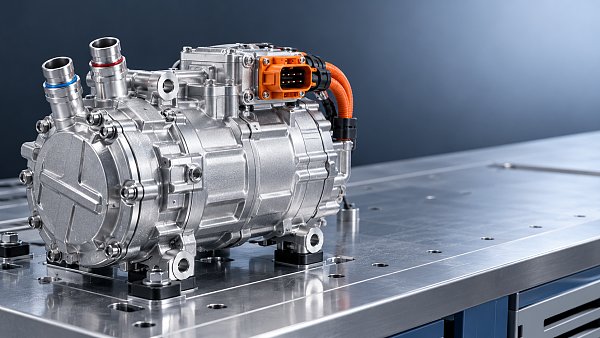
Application fit starts with compressor type. Scroll, swash plate, and electric compressors each bring different design priorities, testing needs, and cost structures.
Vehicle class matters too. Passenger cars, light commercial vehicles, and electrified platforms can demand different pressure behavior, efficiency targets, and control compatibility.
A capable car AC compressor supplier usually defines where it is strongest. That focus often leads to better engineering support and fewer mismatch risks.
Regional compliance should also be checked early. Requirements can differ by destination market, especially when documentation, labeling, or validation standards vary.
In actual sourcing practice, the best question is not who sells the most compressors. It is who fits the target application with the least uncertainty.
What are the most common sourcing mistakes, and how can they be avoided?
One common mistake is approving a car AC compressor supplier after checking only sample appearance and initial price. Early samples do not prove production stability.
Another mistake is ignoring communication quality. Slow technical replies often predict slower problem resolution later, especially when field claims appear.
It is also risky to assume all compressors with similar dimensions are interchangeable. Mounting fit, lubricant compatibility, refrigerant specification, and control logic may differ.
Some sourcing teams also underestimate launch timing. Tooling approval, validation samples, and document confirmation can consume more time than assembly itself.
- Do not compare quotes without identical technical assumptions.
- Do not skip audit questions on process capability and traceability.
- Do not rely on verbal lead time promises.
- Do not treat warranty terms as a later discussion.
A balanced evaluation usually wins over a fast decision. The better car AC compressor supplier is often the one that reduces future surprises, not just current spend.
So what should a final supplier checklist look like before approval?
A practical final review should combine cost, lead time, quality, and application fit on one page. If one dimension is unclear, approval is probably premature.
The most effective checklist is not complicated. It simply forces every important sourcing question into view before commitments are made.
- Price is mapped by volume, terms, tooling, and warranty exposure.
- Lead time is supported by capacity, material visibility, and delivery records.
- Quality is backed by certifications, testing data, and corrective action discipline.
- Application fit is confirmed by compressor type, vehicle use, and market requirements.
- Communication is responsive enough for launch changes and claim handling.
If several options remain, compare them against actual program risk rather than headline savings. That approach usually leads to a better long-term sourcing outcome.
It also helps to keep tracking market and technology signals. As GACT’s coverage shows, compressor decisions increasingly connect with wider thermal system strategies across global vehicle programs.
The next step is straightforward. Define the exact compressor application, align the commercial checklist, and verify evidence before placing volume orders.
Have questions about this sector analysis, or seeking best practices specific to your niche? Drop us a line below and let the senior consultants at GAC assist you.
“We respect your privacy. Your information is strictly confidential.”
Related News
- 00
0000-00
What does each FAKRA cable color code mean? - 00
0000-00
How to compare noise ratings for battery coolant pumps - 00
0000-00
How bright should automotive display systems be in sunlight? - 00
0000-00
How heat pumps improve the efficiency of EV thermal systems - 00
0000-00
Can a smart cockpit platform support multiple displays?
Weekly Insights
Stay ahead with our curated technology reports delivered every Monday.
Recommended News
 What does each FAKRA cable color code mean?FAKRA cable color code explained: Explore common connector colors, typical uses and key compatibility checks before choosing a replacement.Author:Time:Nov 11, 2026
 How to compare noise ratings for battery coolant pumpsCompare coolant pump low noise ratings with confidence. Learn how test conditions, hydraulic duty, tonal noise and installation affect your choice.Author:Time:Nov 10, 2026
 How bright should automotive display systems be in sunlight?Automotive Display Systems need more than brightness to stay readable in sunlight. Discover why 1,000 nits is a starting point and how to evaluate glare and heat.Author:Time:Nov 09, 2026
 How heat pumps improve the efficiency of EV thermal systemsEV Thermal Systems use heat pumps to reduce heating energy demand. Explore how they work, where they excel, and what limits efficiency in cold weather.Author:Time:Nov 08, 2026
 Can a smart cockpit platform support multiple displays?Can a smart cockpit platform support multiple displays? Explore key requirements for performance, safety, connectivity, and supplier evaluation.Author:Time:Nov 07, 2026
 How is automotive connector vibration resistance tested?Automotive connector vibration resistance testing reveals hidden contact failures. Explore test profiles, continuity monitoring and pass criteria.Author:Time:Nov 06, 2026
 How heat pumps save energy in automotive cabin climate systemsAutomotive Cabin Climate Systems energy saving starts with smarter heat pump design. Explore real-world efficiency, cold-weather trade-offs, and testing tips.Author:Time:Nov 05, 2026
 Is an EV heat pump worth it for winter driving range?Is a heat pump worth using in a cold-climate EV? Discover how it affects winter range, when it pays off, and what to check before buying.Author:Time:Nov 04, 2026
 When should you use 50-ohm coaxial cable instead of 75-ohm?Coaxial cable 50 ohm or 75 ohm? Learn when to use each, avoid impedance mismatches, and choose the right cable for reliable RF and video performance.Author:Time:Nov 03, 2026
 How to select a high temperature motor harness for an EVChoose the right high temperature motor harness for your EV. Compare thermal limits, current capacity, shielding, routing, and validation evidence.Author:Time:Nov 02, 2026
 How much does electric power steering replacement cost?Electric power steering price typically ranges from $1,000 to $3,000 for major replacements. Discover cost factors, repair options, and tips for comparing quotes.Author:Time:Nov 01, 2026
 How to size an EV A/C compressor for the required cooling capacitySize an EV A/C Compressor with confidence. Explore cooling loads, performance maps and power limits to select the right compressor for your vehicle.Author:Time:Oct 31, 2026
 How to choose the right pitch for an FPC board connectorFPC board connector pitch affects space, assembly and reliability. Learn how to compare options and select the best fit for your design.Author:Time:Oct 30, 2026
 How zonal design affects harness routing in high-voltage EV architecturesExplore high-voltage electrical architecture zonal design and its impact on EV harness routing. Discover key trade-offs in cable length, safety, thermal performance, and service access.Author:Time:Oct 29, 2026
 How tariffs affect costs in global automotive parts supply chainsNavigate tariffs in the global automotive parts trade supply chain. Learn to compare landed costs, manage duty exposure, and uncover smarter sourcing strategies to protect your margins.Author:Time:Oct 28, 2026
 How to assess vendor lock-in in a software-defined vehicle platformAssess Software-Defined Vehicle platform lock-in with practical tests for API portability, data access, update control, and exit costs. Learn how to choose a platform with a proven exit path.Author:Time:Oct 27, 2026
 How ISO 26262 guides functional safety in steer-by-wire systemsExplore steering systems functional safety through ISO 26262. Learn how hazard analysis, fault-tolerant design, and validation build a stronger steer-by-wire safety case.Author:Time:Oct 26, 2026
 How to evaluate a steering angle sensor manufacturer's accuracy claimsEvaluate steering angle sensor manufacturer accuracy claims with practical checks on calibration, latency, and test evidence. Compare suppliers confidently and avoid costly selection mistakes.Author:Time:Oct 25, 2026
 How to diagnose CAN bus faults in a hybrid vehicle control unitDiagnose Hybrid Vehicle Systems control unit CAN bus faults with step-by-step power, wiring, and waveform checks. Find the root cause and avoid unnecessary replacement.Author:Time:Oct 24, 2026
 How does battery cooling pipe diameter affect coolant pressure drop?Battery Cooling Pipe diameter affects coolant pressure drop and pump power. Explore sizing calculations and practical tips to optimize EV battery cooling and compare options with confidence.Author:Time:Oct 23, 2026
 How to assess PPAP readiness of automotive sensor system manufacturersAssess Automotive Sensor Systems manufacturers for PPAP readiness. Learn to verify production evidence, measurement capability, validation, and traceability to reduce sourcing risks.Author:Time:Oct 22, 2026
 What to ask an FPC connector manufacturer about reliability testingChoosing an FPC Connector manufacturer? Learn what to ask about reliability testing, failure limits, and traceable results to reduce design risks and select with confidence.Author:Time:Oct 21, 2026
 How to verify vehicle fitment for an aftermarket AC evaporatorNavigating the evaporator aftermarket? Verify vehicle fitment with VIN data, OE numbers, and physical interface checks. Use this guide to avoid costly mismatches and order confidently.Author:Time:Oct 20, 2026
 How electric compressor speed affects EV battery cooling capacityElectric compressor technology: battery cooling depends on more than RPM. Discover how speed, refrigerant flow, and system limits affect EV cooling capacity and energy efficiency.Author:Time:Oct 19, 2026
 How to verify a variable frequency compressor supplier’s efficiency claimsVerify a variable frequency compressor supplier’s efficiency claims using COP boundaries, matched test conditions, and duty-cycle data. Learn how to choose with confidence.Author:Time:Oct 18, 2026
 How bend radius affects FPC reliability in automotive camera modulesAutomotive FPC applications: camera module reliability starts with bend radius. Learn how stack-up, strain, and validation guide robust designs and help prevent costly failures.Author:Time:Oct 17, 2026
 How to diagnose intermittent loss of electric power steering assistMaster power steering system diagnostics to trace intermittent EPS assist loss. Learn proven checks for voltage, wiring, and fault codes to avoid costly guesswork.Author:Time:Oct 16, 2026
 How to size automotive power modules for electric compressorsSize automotive power modules for electric compressors with confidence. Learn how voltage, phase current, losses, and cooling shape reliable selection—and avoid costly oversizing.Author:Time:Oct 15, 2026
 Why automotive power electronics are shifting to silicon carbideAutomotive Power Electronics are shifting to silicon carbide. Discover how SiC can cut losses, boost EV power density, and reshape cooling, reliability, and system costs.Author:Time:Oct 14, 2026
 How EV adoption shapes the electrically driven compressor marketExplore how EV adoption shapes the electrically driven compressor market, from battery cooling and heat pumps to supplier margins. Discover the drivers of profitable growth.Author:Time:Oct 13, 2026